
6 First-Month Tips for Living in Valencia, Spain

Moving to Valencia is exciting and a little bit chaotic, especially in that first month when you’re trying to figure out paperwork, furniture, doctors, schools, and where on earth to buy a decent pillow. When we landed here with four kids, three dogs, and very basic Spanish, we thought we were pretty prepared… and then reality hit.
Almost every tip in this post comes from something we did the hard way: confusing appointments, unnecessary IKEA stress, weird mattress sizes, and a lot of walking with way too many bags. These are six specific first-month tips we wish someone had told us before we arrived, so you can skip some of the frustration and settle into life in Valencia a little faster.
Key Takeaways
-
Bring a Spanish speaker to your padrón and doctor appointments to avoid communication stress and ensure you understand the necessary procedures and forms.
-
Expect different vocabulary at official appointments compared to everyday Spanish, which can lead to confusion if you’re not adequately prepared.
-
Hiring a translator or helper for key appointments can save you time and frustration, making the transition smoother for you and your family.
1. Bring a Spanish Speaker to Your Padrón and Doctor Appointments in Valencia
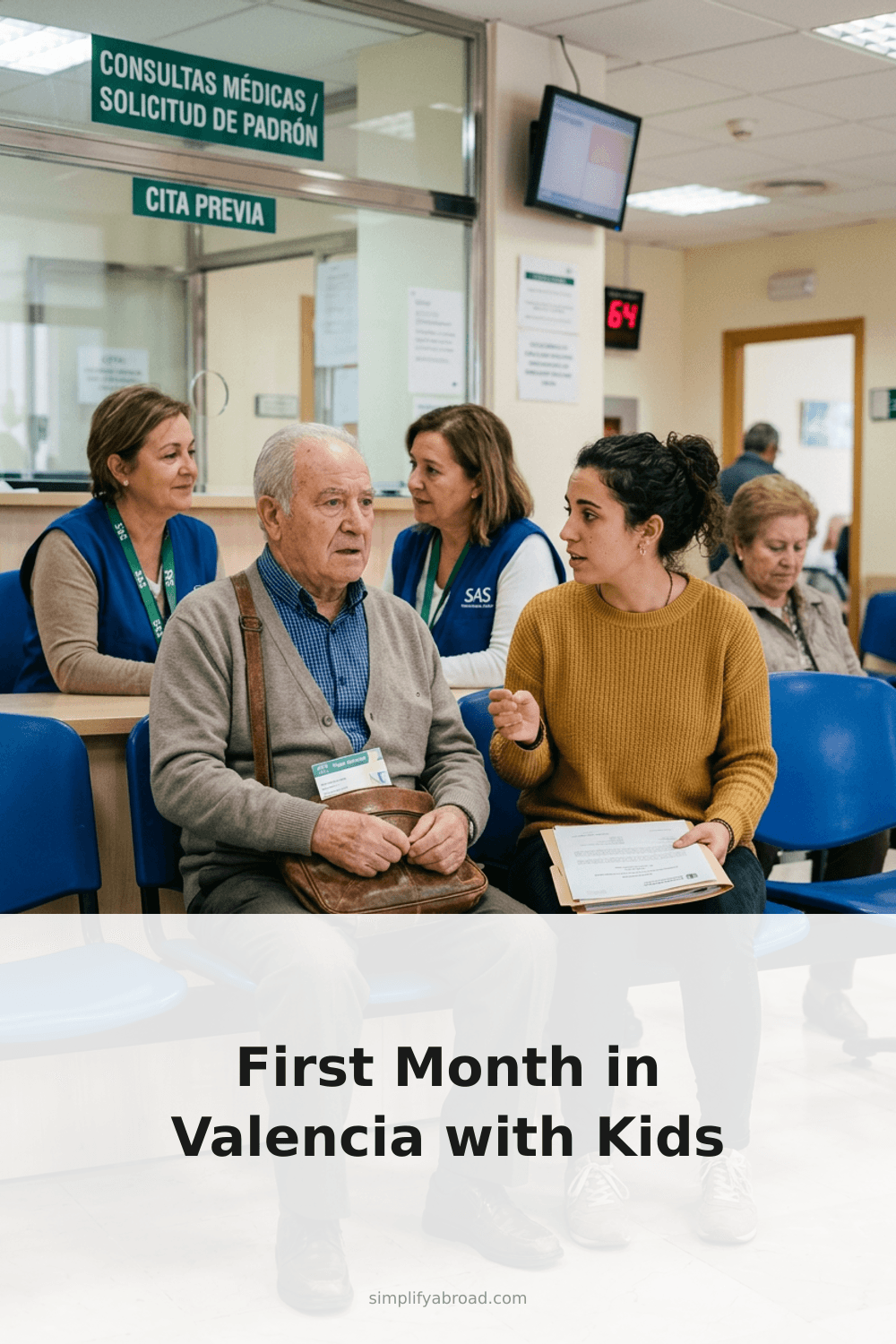
If your Spanish isn’t strong, try to ask or hire someone who speaks Spanish to go with you to your padrón appointment and your first doctor appointments in Valencia, Spain. Going alone with “classroom Spanish” versus going with a fluent speaker is the difference between a stressful, emotional mess and something you just get through.
We had to do the padrón (local registration) and our initial doctor appointments soon after arriving.
We felt pretty good going in because we’d been taking Spanish classes. Those classes actually made us overconfident. The vocabulary at the padrón office and at the doctors’ offices was totally different from the basic, everyday Spanish we’d practiced, like ordering at a restaurant or chatting about simple topics.
At our padrón appointment in Valencia, the gap hit hard. My wife felt like she was being yelled at by the padrón lady and was almost in tears afterward because of the communication stress. Nobody was really being mean; we just didn’t understand the vocabulary, the questions, or what we were supposed to do next. If you get anxious in official or medical situations, bring someone who can translate and keep things calm.
If you’re moving to Valencia with kids, this matters even more for those early doctor appointments and school forms. Kids in school need an annual doctor exam and a signed form confirming everyone is healthy. So you’re not just doing a casual checkup; you’re dealing with forms and specific questions that need clear answers. For those first doctor appointments in Valencia, having a Spanish speaker there to help you understand what’s being asked and to make sure the school medical forms are filled out correctly can save you a lot of back-and-forth.
Finding help for a Spanish speaker for padrón or doctor visits doesn’t have to be complicated. You can often find a babysitter or helper through Valencia expat Facebook groups or local recommendations, and we estimate a babysitter or helper at about $10 an hour. For these key appointments, your padrón appointment in Valencia and those first doctor visits, that $10 an hour is worth it. While you’re sorting out things like bank accounts and figuring out how to move money over (we’ve had a good experience using Wise to transfer dollars to euros), this is one area where paying for help up front can prevent a lot of stress later.
If you’re searching “padrón appointment Valencia do I need translator” or “Spanish speaker for padrón,” from our experience the answer is: if your Spanish isn’t strong and you tend to get stressed in official or medical situations, yes, bring someone. It turns a potentially overwhelming part of your expat checklist into something you just get done and move on from.
2. Have a Real Plan for IKEA and Furniture Shopping in Valencia
If you’re moving into an unfurnished apartment in Valencia, you need a real furniture plan or IKEA will eat your entire first month living in Valencia, Spain. We didn’t rent a furnished place, so we had to buy a lot of furniture ourselves, and we made it way harder than it needed to be.
Here’s what we did: instead of renting a van once, we kept going to IKEA in taxi vans, loading up a few things at a time, and doing this almost every other day for about two weeks. IKEA is roughly a 15–20 minute drive from Valencia city center, so it felt “close enough” to justify another quick trip. But when you add up “almost every other day for about two weeks,” plus the hassle of finding taxi vans, loading, unloading, and repeating, it was a terrible use of time and energy.
What we should’ve done, and what I’d recommend if you’re in an unfurnished apartment in Valencia, is either rent a van once or just use IKEA delivery and be done with it.
A van rental is about $30 plus gas, which would have allowed us to do one big trip instead of many small ones. Multiple taxi van trips over two weeks vs. A single $30 van rental plus gas is not even close in terms of efficiency.
You can easily rent a van in Valencia to go to IKEA, or you can have IKEA deliver your furniture if you’re doing IKEA furniture shopping in Valencia without a car. Both options are straightforward. We just chose the most annoying one by default because we were trying to “keep it simple” and avoid driving, and it backfired.
If you’re from the States and worried about driving, you can get an international driver’s license through AAA in about five minutes for around $20. Even without an international driver’s license, you may still be able to rent a van locally, but having one makes it easier. So if you know you’re coming to an unfurnished rental, it’s worth sorting that out before you land.
If you rent a furnished place, you don’t need to think about any of this and you can skip the big IKEA runs entirely. If you go the unfurnished route, you’ll likely need a serious furniture strategy, and in Valencia that basically means planning for IKEA Valencia trips, renting a van or arranging IKEA delivery, and not doing what we did with endless taxi runs. This one decision can save you a lot of time in your first month and free up your energy for more important stuff than hauling flat-packs back and forth.
3. Join Valencia Expat Facebook Groups Early for Tips and Community
Joining Valencia expat Facebook groups was huge for us socially and mentally in our first month living in Valencia, Spain. Out of everything we did to get settled, this helped our mental health and social life the fastest.
There are a lot of options: groups like Americans in Valencia, Expats Valencia, and Women in Valencia, plus a bunch of smaller niche ones.
We went a little overboard and estimate we joined about 20 different Facebook groups related to Valencia expats. It was probably excessive, but it worked for meeting people quickly, especially because we landed here knowing basically no one.
Within our first week, we met a big group of moms and kids through these Valencia expat Facebook groups, and that changed everything. We’re still friends with them, and our kids are now very close. Suddenly you’ve got playdates, coffee meetups, and people you can message when you’re confused about something like a padrón appointment in Valencia or wondering “do I need a translator?” for some random bit of bureaucracy.
For us as an expat family in Valencia, the weekday vs. Weekend contrast is huge. Our kids go to school in Spanish and do their sports, like football, in Spanish as well. They’re fully immersed Monday through Friday. On weekends, we meet up with the English-speaking friends we met through these groups to reset before the next week. Having English-speaking families to see on weekends gives the kids and us a mental break from being in Spanish all week at school and sports.
It’s the same thing when we’re doing other “life admin” here, whether that’s figuring out logistics, dealing with something like “Ikea furniture shopping in Valencia without a car,” or just asking other expats how they’re making friends in Valencia. If you’re moving to Valencia with kids and you’re starting from zero socially, I’d treat Valencia expat Facebook groups as a core part of your plan. Going from moving without a social network to quickly building one through these groups was the difference between feeling isolated and actually feeling like part of the expat community.
If you’re creating content about your move or trying to keep family updated, tools like ContentFold can also help you repurpose what you’re already sharing into something more organized without adding to your mental load.
Free guideThe Moving to Spain & Europe GuideGet it free →4. Use Facebook Groups Without Getting Piled On
Here’s the deal with expat mom groups or any of the Valencia expat Facebook communities: use the search function before you post anything. In a lot of these groups, people get really frustrated if you ask something that’s already been asked like 80 times, and they can go a bit wild on you in the comments.
We personally didn’t get attacked, but we’ve watched it happen to other people over and over with the same questions about things like your first month living in Valencia, “padrón appointment Valencia do I need translator,” or super practical stuff like “Ikea furniture shopping Valencia without car” and “renting a van in Valencia.”
The easiest way to avoid that drama is to treat the search bar as your best friend. Type in your question first, scroll through what’s already there, and you’ll usually find detailed threads on using Facebook groups in Valencia, Valencia expat Facebook etiquette, expat mom groups in Valencia, or how to use expat groups in Spain without annoying the regulars. If you do that before posting, you usually get a smooth, drama-free experience instead of people jumping on you for repeating something that’s already been covered.
🎬 Check out Original Content
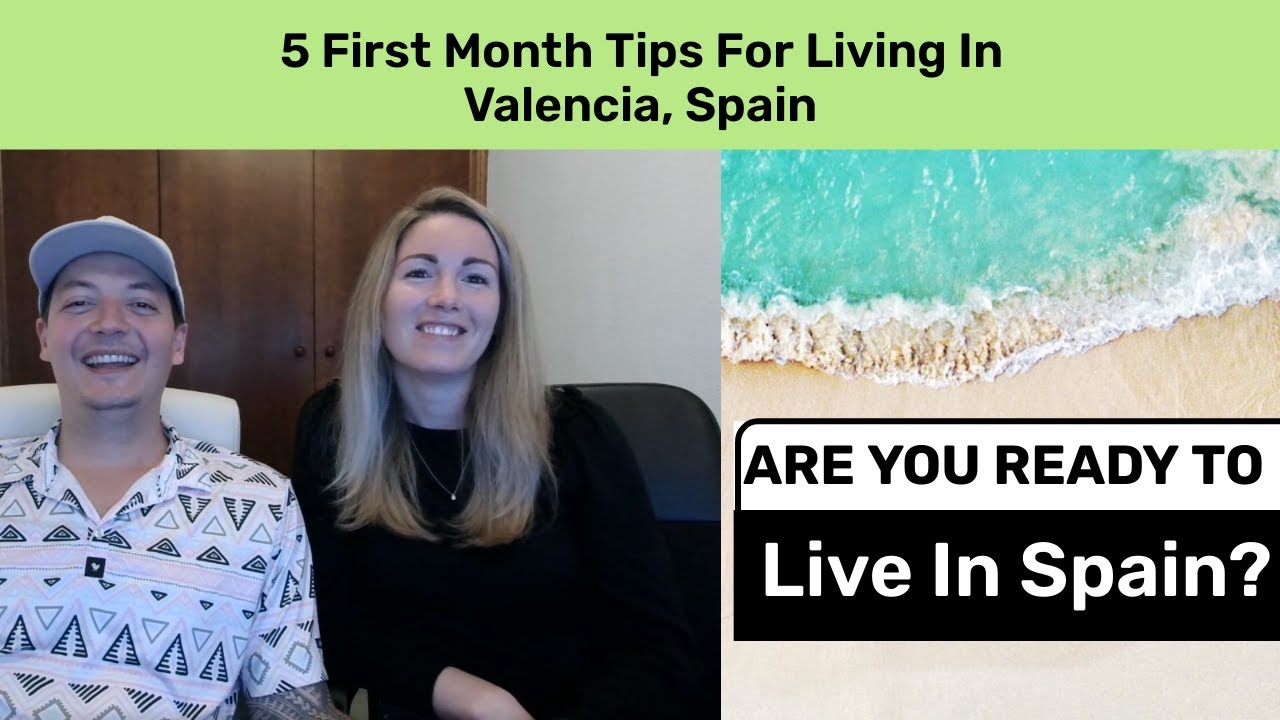
Click above to experience the full content!
5. Double-Check Mattress Sizes (Learn From Our Disaster)
If you’re moving to Spain and ordering beds online, double‑check every single mattress size, because our first 10 days in Valencia were spent sharing what was basically a twin on the floor thanks to a centimeters vs. Inches mistake.
We knew we wouldn’t have furniture at first, so we ordered mattresses from Amazon to have something to sleep on. Ordering from Amazon went fairly smoothly, delivery-wise. The problem wasn’t Amazon at all, it was us misjudging the mattress size because we confused centimeters and inches.
For the kids, we looked up children’s mattresses around 90 by 105 centimeters and assumed that was fine.
Children’s mattresses in Spain can be around 90 by 105 centimeters, which is roughly a twin or slightly smaller, so that part actually made sense. Where we went wrong was using that same mental model for our own bed.
For our own mattress, we saw 105 and thought “that’s plenty,” incorrectly thinking of it like 15 inches instead of 105 centimeters. In our heads, 105 sounded generous. In reality, 105 centimeters is basically a twin. So we ended up with a mattress that was basically a twin on the floor for both of us for the first 10 days while we waited for our proper bed from IKEA.
We shared that twin-sized mattress on the floor for about 10 days while waiting for our proper bed from IKEA. The correct IKEA bed arrived after those 10 days, solving the problem. We still have that bed, but we consider the size choice a clear mistake. The Amazon delivery itself was smooth; all the pain came purely from our own size conversion error.
If you’re in your first month living in Valencia, juggling things like a padrón appointment, scrolling Valencia expat Facebook groups for tips, and trying to do IKEA furniture shopping in Valencia without a car, it’s really easy to rush this step when you’re also buying beds and furniture. When you’re making conversions between inches and centimeters, pay very close attention. Especially for mattress sizes in Spain and buying beds in Valencia, don’t assume the numbers “sound right”, actually convert them so you don’t recreate our Amazon Spain mattress mistake.
6. Buy a Rolling Shopping Bag (You’ll Use It Constantly)
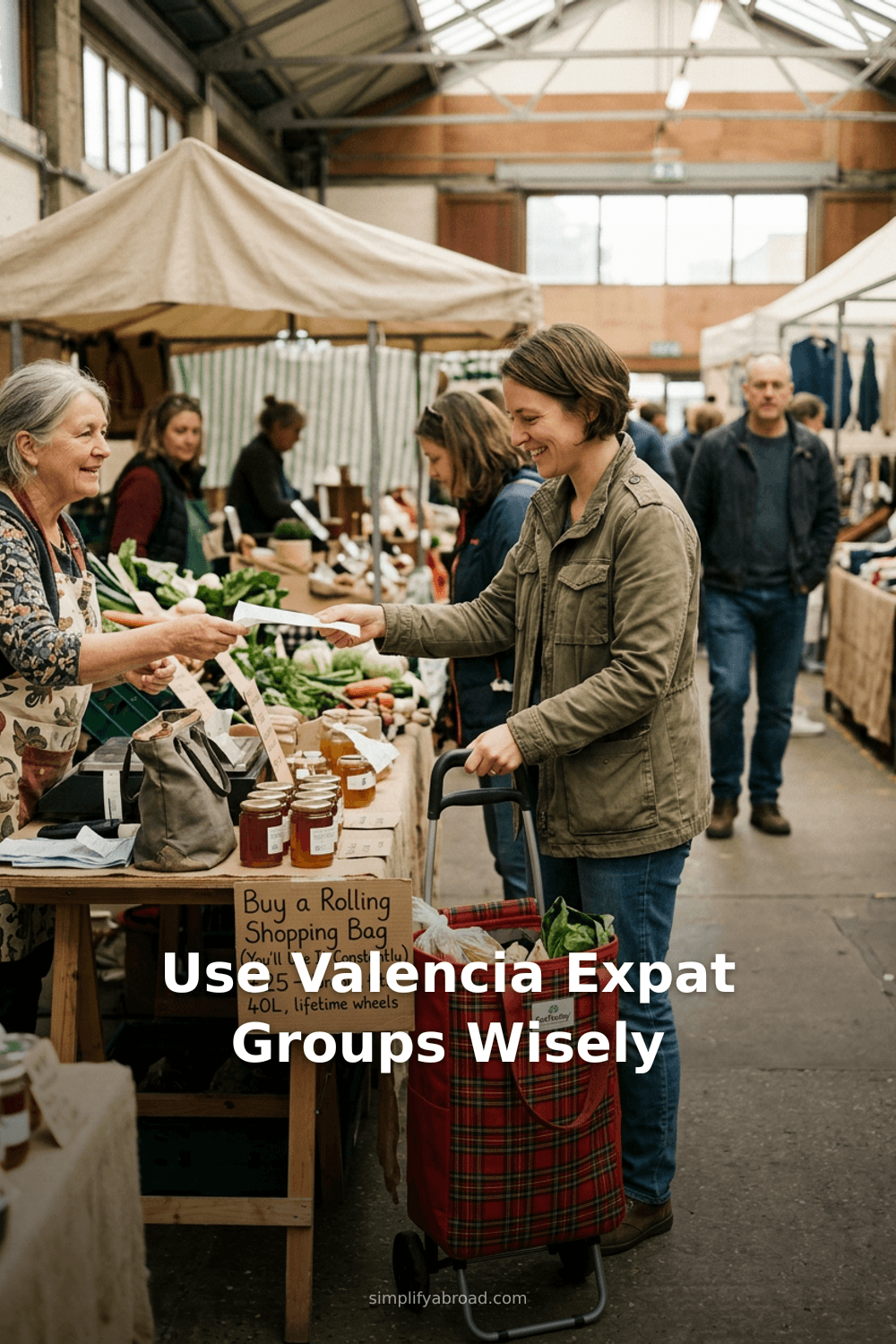
A rolling shopping bag sounds like such a small thing, but for daily life in Valencia, especially if you’re living here without a car, it’s honestly too useful not to have.
In the U.S., we mostly saw rolling bags as something older people used for groceries.
Here in Europe, and especially in Valencia, they’re everywhere and used by all ages. Once you’re walking everywhere, you immediately understand why. Carrying heavy groceries and water bottles by hand while walking blocks is one thing if you’re doing a quick trip. Doing that regularly, with kids in tow, gets old really fast. Swapping that for a rolling shopping bag makes a huge difference.
We use ours constantly. Yes, it’s great for groceries, but we also use it to pack food and supplies for full days out with our four kids. We’re usually gone from morning till evening, so we literally pack the roller bag full of food for the day. We also throw in balls for the Turia (the Turia park) and water bottles. Because we walk everywhere, having something that actually carries the heavy stuff, especially all those water bottles, matters a lot. People can see us coming because of our little rolly bag.
You’re not limited to the grocery store, either. You can drag the bag to the beach as well, which makes hauling snacks, drinks, and random kid stuff a lot easier when you’re not loading everything into a trunk. Instead of carrying everything in your hands or on your shoulders for blocks, you just roll it.
We bought ours at El Corte Inglés. Basic models are around 20 euros, and the higher-end versions run about 80–90 euros. There’s a whole range, so you don’t have to spend a ton to get something that works. In our first month living in Valencia, this ended up being one of those “oh, this is how people actually do daily life here” purchases, up there with figuring out things like your padrón appointment in Valencia, joining Valencia expat Facebook groups for tips, or planning an IKEA furniture shopping trip in Valencia without a car.
You might feel a bit like an old person using one at first, especially if you’re coming from somewhere where these are “for grandparents.” But in city life in Europe, and specifically if you’re walking everywhere in Valencia, it’s absolutely worth it. If you’re searching for daily life tips for Valencia or wondering how people manage walking everywhere here, I’d put a rolling shopping bag near the top of the list.
That first month in Valencia is a lot of “learn as you go,” but a few small decisions, like bringing a Spanish speaker to your padrón appointment in Valencia, joining the Facebook groups, or just buying a rolling shopping bag, really do make everyday life smoother. We made plenty of mistakes so you don’t have to, and once you get past those early logistics, the city starts to feel a lot more like home. If you can keep your expectations flexible and double-check a few of the things we mentioned here (especially mattress sizes), you’ll be in a much better spot than we were on day 30.
Frequently Asked Questions
Why is it important to bring a Spanish speaker to appointments?
Having a Spanish speaker with you can significantly reduce communication stress and help you navigate the specific vocabulary used in official settings, ensuring you understand the procedures and forms required.
What should I expect during my padrón and doctor appointments?
You can expect the vocabulary and questions at these appointments to differ greatly from everyday Spanish, which can lead to confusion if you’re not adequately prepared. It’s crucial to have someone fluent to help you through these processes.
How can I find someone to help with translations?
You can often find a translator or helper through expat Facebook groups or local recommendations in Valencia. Hiring someone for around $10 an hour can save you a lot of stress during important appointments.
What are the consequences of not having a plan for furniture shopping?
Without a clear plan for shopping at IKEA or other furniture stores, you might find yourself overwhelmed and spending more time than necessary on furnishing your apartment, which can eat into your first month in Valencia.
What should I prioritize during my first month in Valencia?
Focus on essential tasks like completing your padrón registration, setting up doctor appointments, and acquiring necessary furniture, as these will help you settle in more smoothly and quickly.
The Moving to Spain & Europe Guide
70+ pages on moving a family to Spain: the visas compared, the 90-day countdown, schools, and your first 30 days.


