
8 Best Areas to Stay in Valencia, Spain

If you’re trying to figure out where to stay or live in Valencia, Spain, it can feel like every neighborhood sounds “nice” until you’re actually on the ground with groceries, kids, or a dog that needs a walk. We’re a family of six with three dogs, and we’ve either stayed in or seriously scouted all of the areas in this post while deciding where to base ourselves.
If friends with kids came to Valencia for a week, we would tell them to stay near the city center: the Colón area, Gran Vía just below it, or near Estació del Nord, the main train station. They’re a bit quieter, the food is great, and the metro and buses are right there. Three to five days is plenty to see most of the city, even with a beach day. Below are what we think are the best neighborhoods in Valencia: eight areas we know from living here since 2022 and staying in or scouting each one.
Our priorities were pretty simple: easy access to the Metro, being close to the Turia park for the dogs, good food within walking distance, and enough space that four kids aren’t stacked on top of each other. In this guide, I’ll walk through the eight areas that kept coming up for us, what each one actually feels like day-to-day, and how the costs compared to what we were paying back in somewhat rural Ohio.
By the end, you should have a clear sense of which neighborhoods are worth focusing on for a short stay, and which ones could realistically work for a longer-term move.
Key Takeaways
-
For a family visit, we’d stay in the Colón area, Gran Vía or near Estació del Nord: a central location, a bit quieter, and right on the metro and bus lines.
-
We live in Colón because it’s a couple of blocks closer to the Metro than Gran Vía, close to the Turia for our dogs, and has about six grocery stores within two blocks.
-
Our rent in Colón, which locals call probably the most expensive area of Valencia, is still lower than what we paid for a townhome in somewhat rural Ohio.
-
Pick the city center to explore and the beach to relax; for a real beach vacation, go about 20 minutes outside the city.
How We Chose the Best Areas to Stay in Valencia (for Trips and Moving)
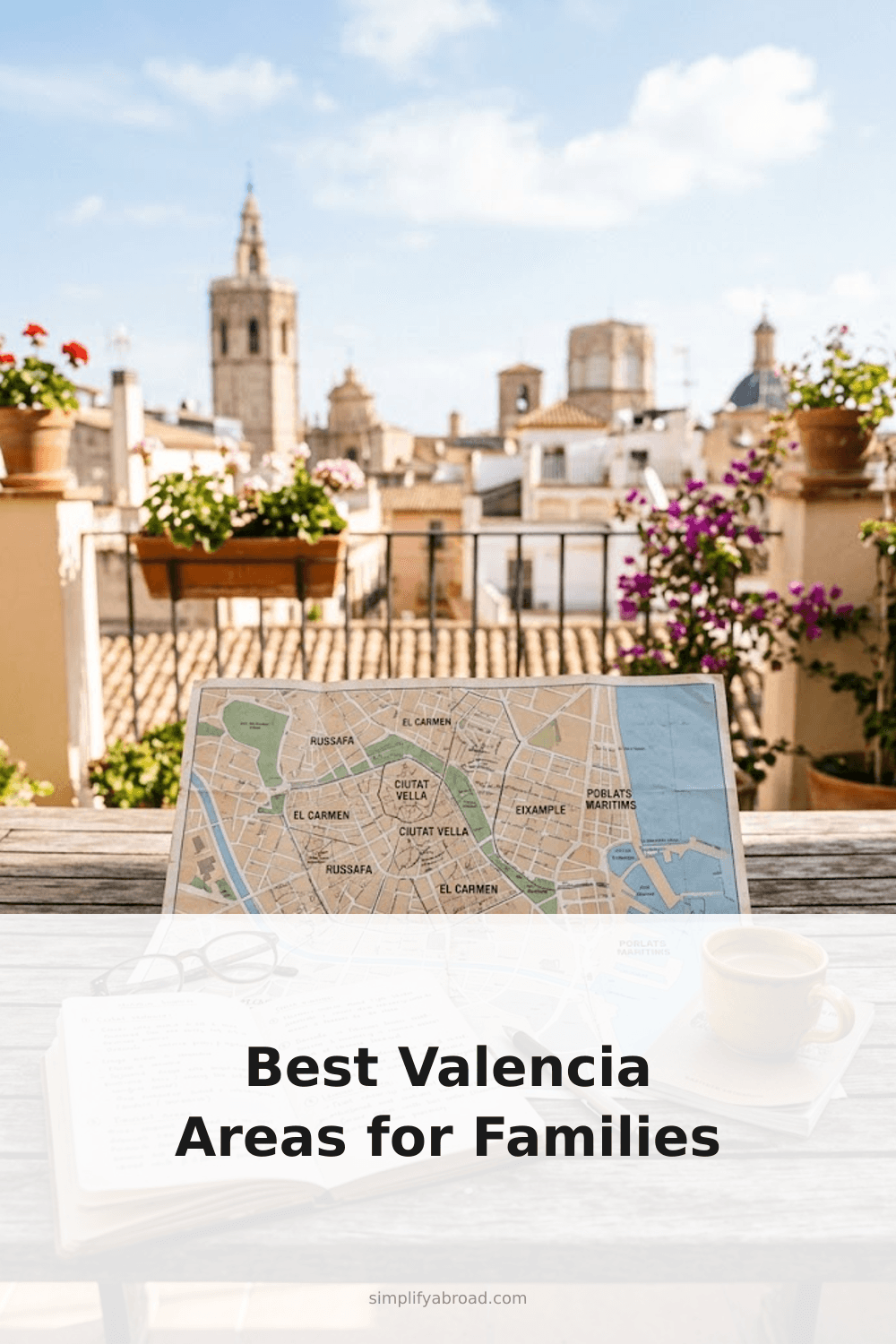
We didn’t just look at a map and circle “cool” neighborhoods. We evaluated everything two ways at the same time: as short-term visitors trying to figure out where to stay in Valencia, and as a family scouting where we could actually live long term.
Our filters were pretty specific. We cared a lot about Metro access because we don’t have a car.
We looked at how far each area was from the Turia park, because that’s basically the backyard if you’ve got kids and dogs. We paid attention to food options within walking distance, the general noise level, and rental prices.
Our situation also isn’t “standard tourist.” We have 4 kids + 3 dogs, which made finding a larger, pet-friendly place harder and immediately knocked out a lot of listings that might work fine for a single person or a couple. In some areas, we were repeatedly denied rentals not because of the dogs, but because we have four kids. That alone changes which neighborhoods are realistic for an expat family of six without a car.
For context, before Valencia we were renting a townhome in somewhat rural Ohio while we were deciding whether to buy a house or leave the country. Even in what’s considered the most expensive area of Valencia, our rent is still cheaper than what we paid there. And because we’re paying everything in euros now, using something like Wise to move money over from dollars has been a really practical part of making this work.
Where We’d Tell Friends With Kids to Stay
This one’s pretty easy. We love being near the city center, and we usually recommend the Colón area, around the Mercado de Colón, or Gran Vía, which is just below it. Both have great shops, both are a bit quieter, and both have amazing food right next to them. Near Estació del Nord works well too, because the metro, the buses, everything is easy to get to.
We don’t recommend El Carmen, the old town, as much for families. Not that it’s a bad area. It’s just very busy and stays loud pretty late. If you stay anywhere in the city center, you can walk to it in 10 to 15 minutes anyway.
Beach or City Center for a Family Visit?
Obviously, this depends on each person.
- The city center is for exploring: paella cooking classes, walking around, shopping, the museums, the soccer stadiums. The bus and metro connections are just easier inside the city. If you want to really see Valencia, stay in the city.
- The city beach has a boardwalk and restaurants. Valencia’s city beach isn’t bad at all. We liked it more than Alicante’s and put it in the same conversation as Málaga’s.
- A true beach vacation: go about 20 minutes outside Valencia, north or south along the coast. You’ll find much better beaches, more untouched, where you’re more on your own.
If you want to relax and chill, pick the beach. If you want to explore, pick the city.
1. Colón Area (Cánovas), Central, Convenient, and Our Top Pick for Families
We chose to live in the Colón area because it hits a very specific sweet spot for us: very central, very convenient, and still somehow cheaper than what we were paying in somewhat rural Ohio, even though locals describe it as probably the most expensive area of Valencia. The neighborhood is technically called Cánovas, but most people seem to refer to it as the Colón area. It’s where we lived when we first moved, and where we came back to. The main metro and bus lines are right there, and the Turia park is close.
A big part of why we ended up here is practical: we needed a bigger place that would accept three dogs and four kids. That narrowed down our options pretty fast, and this area came out on top. We also chose Colón over Gran Vía mainly because it’s a couple of blocks closer to the Metro, which matters a lot when you’ve got kids and no car. Being able to walk a few minutes instead of adding extra blocks every time you go somewhere adds up when you’re doing it multiple times a day.
From our apartment, the main Colón Metro station is about a 2‑minute walk.
That’s been huge for day-to-day life, and you can get pretty much anywhere in the city quickly. This area is very much city center, not beach, but it makes a lot of sense if you want easy transit and to be close to everything in central Valencia.
On the daily-life side, this is where Colón really works for us. We have roughly six grocery stores within about two blocks of our apartment, which makes errands simple. Compared to some other areas we talk about, Colón has fewer restaurants right downstairs but more grocery stores very close by, and for us that trade-off has been worth it. There are clothing and other shops within a 5–6 block radius, so most of the typical “we need this today” stuff is just a short walk away.
The main downside for us has been food options immediately downstairs. Under our building, there aren’t many places we actually want to eat at regularly, so we usually walk 2–3 blocks to find better restaurant choices. It’s not a long walk, but it is a noticeable difference compared to buildings that have a bunch of cafés and restaurants literally at the door. So if your priority is stepping outside and having tons of food options instantly, this specific pocket of Colón/Cánovas might feel a little limited, even though you’re still very central.
Overall, if your priorities are being central, having quick Metro access, easy grocery shopping, and you’re okay with walking 2–3 blocks for better restaurant options, the Colón / Cánovas area lines up really well.
2. Gran Vía, Upscale, Beautiful Streets Popular with Expats
Gran Vía is one of the best areas to stay in Valencia if you want an upscale, city-center feel, and it’s easily one of the top expat-heavy neighborhoods in the city alongside Ruzafa. It’s beautiful, it’s walkable, and it has that “this is where people actually live and go out” vibe that a lot of expats are looking for when they’re choosing the best neighborhoods in Valencia.
We love Gran Vía. The houses, the apartment buildings and the streets are just awesome. A lot of the side streets are single-lane, so there’s less traffic. It’s about a 15-minute walk to the city center, but it’s still inside the Turia, so it’s very central.
We stayed in Gran Vía for a couple of days and really liked the area.
The main Gran Vía avenue runs horizontally across the neighborhood, and those big, wide streets are lined with food options. If you’re the type of person who wants to be able to walk out your door and have multiple restaurants and cafés within a few minutes, Gran Vía makes that really easy.
At the same time, Gran Vía is on the pricier side. Both housing and restaurant prices in Gran Vía are more expensive than in a lot of other neighborhoods, and specifically more expensive than Ruzafa. So if you’re budget-conscious, that’s a real trade-off: Gran Vía vs Ruzafa often comes down to “pay more for a slightly more upscale, polished feel” vs “save a bit and still be in an expat-heavy, central area.”
On the map, our Colón/Cánovas area sits directly above Gran Vía, with the main Gran Vía avenue running horizontally underneath. For us, that’s exactly what tipped the scales. We ultimately chose to live just above Gran Vía because being a couple of blocks closer to the Metro makes a big difference for our family logistics. Gran Vía won on beauty and food, but Colón’s slightly better Metro access won for day-to-day life with kids and regular commutes. Gran Vía is a great option if you value an upscale area with tons of restaurants and don’t mind paying more, while Colón just above it is a smart alternative if Metro access is higher on your list.
3. La Seu / La Xerea (Plaza de la Virgen), Iconic Historic Plaza and Top Tourist Stay
If you’re visiting and want to be in the middle of the old city, the La Seu / La Xerea area around Plaza de la Virgen is at the top of our list. This is one of our absolute favorite parts of Valencia, and we consider it one of the best neighborhoods in Valencia for tourists, especially if you want that classic, historic city-center feel. For a short stay focused on the sights, it’s hard to beat.
Plaza de la Virgen (pronounced more like “Berhin” in Spanish) is kind of the heart of this area. You’ve got this cathedral-like building, a central fountain, and a huge stone or marble-style floor that makes the whole space feel really special. We love it so much we actually took family photos there, and some of our YouTube thumbnails are shot in this plaza. It’s also part of our normal life rhythm: we often walk through Plaza de la Virgen on the way home from our kids’ soccer/football practice, even when it’s not the fastest route, just because we enjoy it.
We highly recommend this area if you can find a place there.
It’s more touristy and busier in peak seasons, but that’s also what makes it such a good base if your priority is being close to the main sights and soaking up the atmosphere.
On the living-here side, this area was tied with Arrancapins as the place we most wanted to live. We tried multiple times to rent in this area and kept getting told no, largely because we have four kids. Compared to more practical areas, we would have sacrificed some transportation convenience to live here if we’d been accepted, because we liked it that much. Two or three couples we know live in this area with three kids each and love it, so it’s definitely possible to do family life here, it just seems a bit harder with a bigger family.
There are a couple of trade-offs compared to somewhere like our Colón area. It’s busier in peak seasons, and grocery stores require a bit more walking compared to our Colón area, which is more practical day to day. The way we think about it: La Seu / La Xerea around Plaza de la Virgen is ideal if you want that iconic, historic, super-central experience and you’re okay trading a bit of everyday convenience and easy groceries for it.
4. El Carmen (Old Town), Beautiful Historic Center Best for Tourists and Nightlife
El Carmen is Valencia’s Old Town, and it’s one of the prettiest, most atmospheric parts of the city. If you’re visiting Valencia, this is absolutely one of the top spots I’d look at. It’s packed with amazing food, bars, nightclubs, and there’s this constant buzz of activity that makes it a great base if you want to be in the middle of everything and nightlife matters to you.
For us, though, we see El Carmen more as a tourist destination than a long-term living base. We’re a family of six without a car, and when we compare it to our quieter, more family-oriented Colón area, El Carmen just doesn’t line up as well with how we actually live day to day. Noise levels in El Carmen are noticeably higher than in our Colón area, and that’s a big factor if you’ve got kids, earlier bedtimes, or you just don’t want to fall asleep to bar noise every night.
Transport is the other big trade-off. In our Colón area, we’ve got very convenient Metro access. From El Carmen, the nearest Metro may be a 10–15 minute walk, and you’re often walking toward Colón or even across the Turia to get there. There are bus options from El Carmen, but you’re then relying on bus schedules and less ideal connections, which matters more when you’re moving a family of six around the city without a car. For singles or couples who bike and don’t mind walking, El Carmen could totally work as a base. For a family, we’d stay nearby and walk in.
In terms of vibe, El Carmen and Ruzafa are the two main nightlife and “something’s always happening” areas. If you know you want city energy, historic streets, and to be able to walk out your door into bars and restaurants, El Carmen is going to check a lot of boxes. We do have one or two friends who live in or near El Carmen and really enjoy it, so it’s not that it doesn’t work for locals or for expats. It’s just that, with a bigger family and no car, we’d personally lean more toward a central, modern neighborhood with quieter streets and easier Metro access, and treat El Carmen as the place we go to eat, wander, and enjoy the Old Town rather than our everyday home base.
Free guideThe Moving to Spain & Europe GuideGet it free →5. Ruzafa, Trendy Expat Hotspot with Endless Food Options
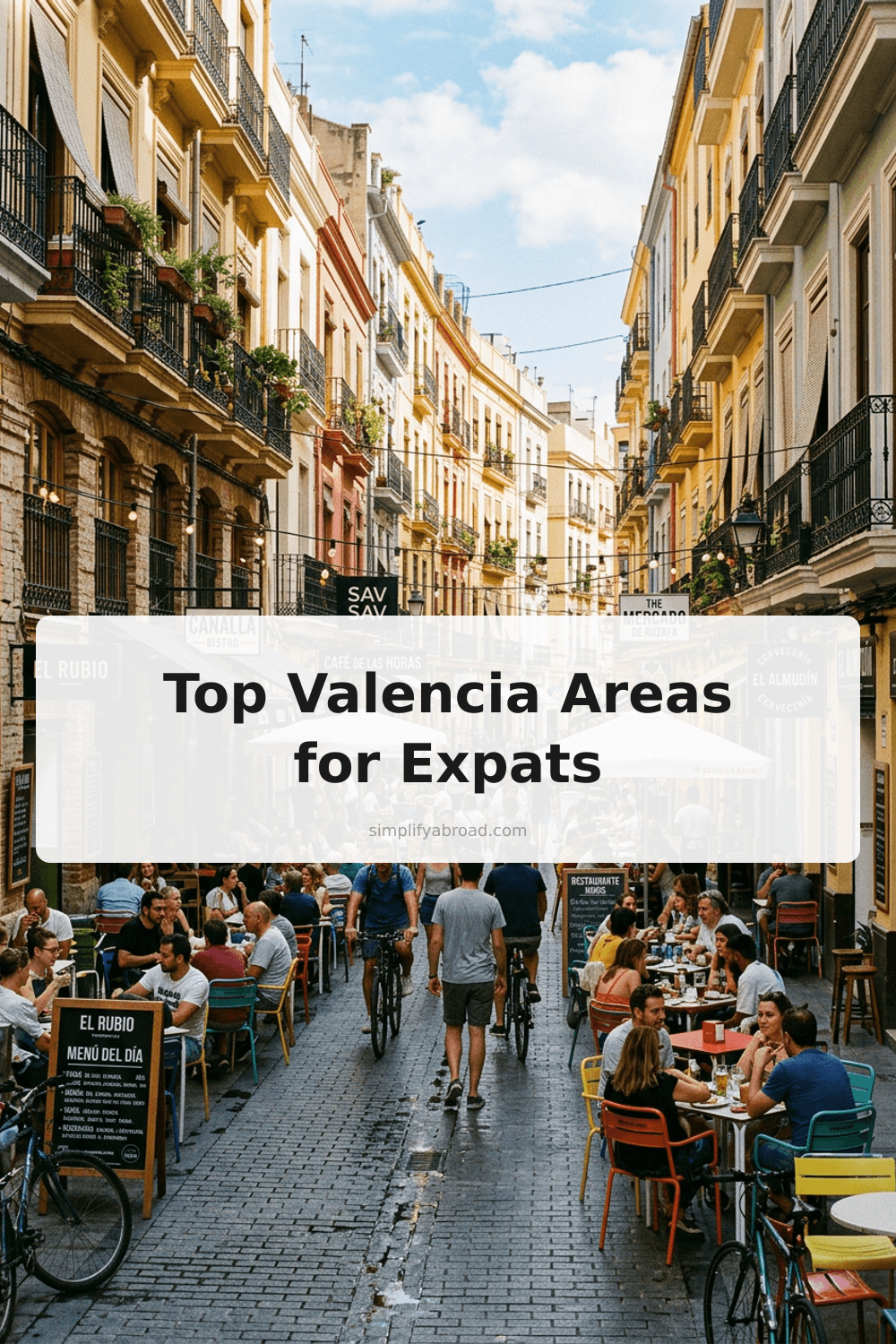
Ruzafa (Russafa) is one of the main expat hubs in Valencia and easily one of the best Valencia neighborhoods for expats if you want energy, restaurants, and a built-in social scene in the city center. It’s also one of the most popular areas to live, up there with Gran Vía, and a lot of people end up shortlisting Ruzafa first.
We stayed in Ruzafa for about 3–4 days and really liked it.
You’ve got tons of food, easy access to the rest of the city center, and a neighborhood that feels very lived-in and social. Compared to our Colón area, Ruzafa definitely wins on restaurant variety. Food options in Ruzafa honestly feel endless, which is why it’s become one of our default areas for meals out.
Even though we don’t live there, we often find ourselves going to Ruzafa for date nights and also bring our kids there. For us, it’s one of those “we’re not based here, but we’re here all the time” neighborhoods. There’s a central market (Ruzafa Market) and a nearby park that are part of our regular routine with the kids, so it still ends up in our weekly rhythm even though our apartment is elsewhere.
Inside that routine, there’s one very specific spot we always call out: Arnau Rosaire, a small fruit stand on the outside bottom part of Ruzafa Market. They sell locally grown oranges, mandarins, and mixed varieties, and we say these might be the best oranges and mandarins we’ve ever had in our lives. Prices are super reasonable, and when we buy a lot, they often hand our kids free oranges, which has basically turned this into a mandatory stop whenever we’re in the area.
So why didn’t we base ourselves there if we like it so much? For us, it mainly comes down to the Turia. Compared to our Colón area, Ruzafa loses for us on proximity to the Turia park for the dogs, and that was a big deciding factor when we were choosing where to live. If you don’t have dogs or you’re less focused on being next to the Turia, many people would actually prefer to live in Ruzafa over where we are. If your priorities are restaurants and social life, Ruzafa is going to make a lot of sense. And if you’re creating content about your move or your travels, tools like ContentFold can make it easier to turn those experiences into posts without spending hours writing everything from scratch.
🎬 Check out Original Content

Click above to experience the full content!
6. Arrancapins, Underrated Gem with Wide Sidewalks and Cheaper Food
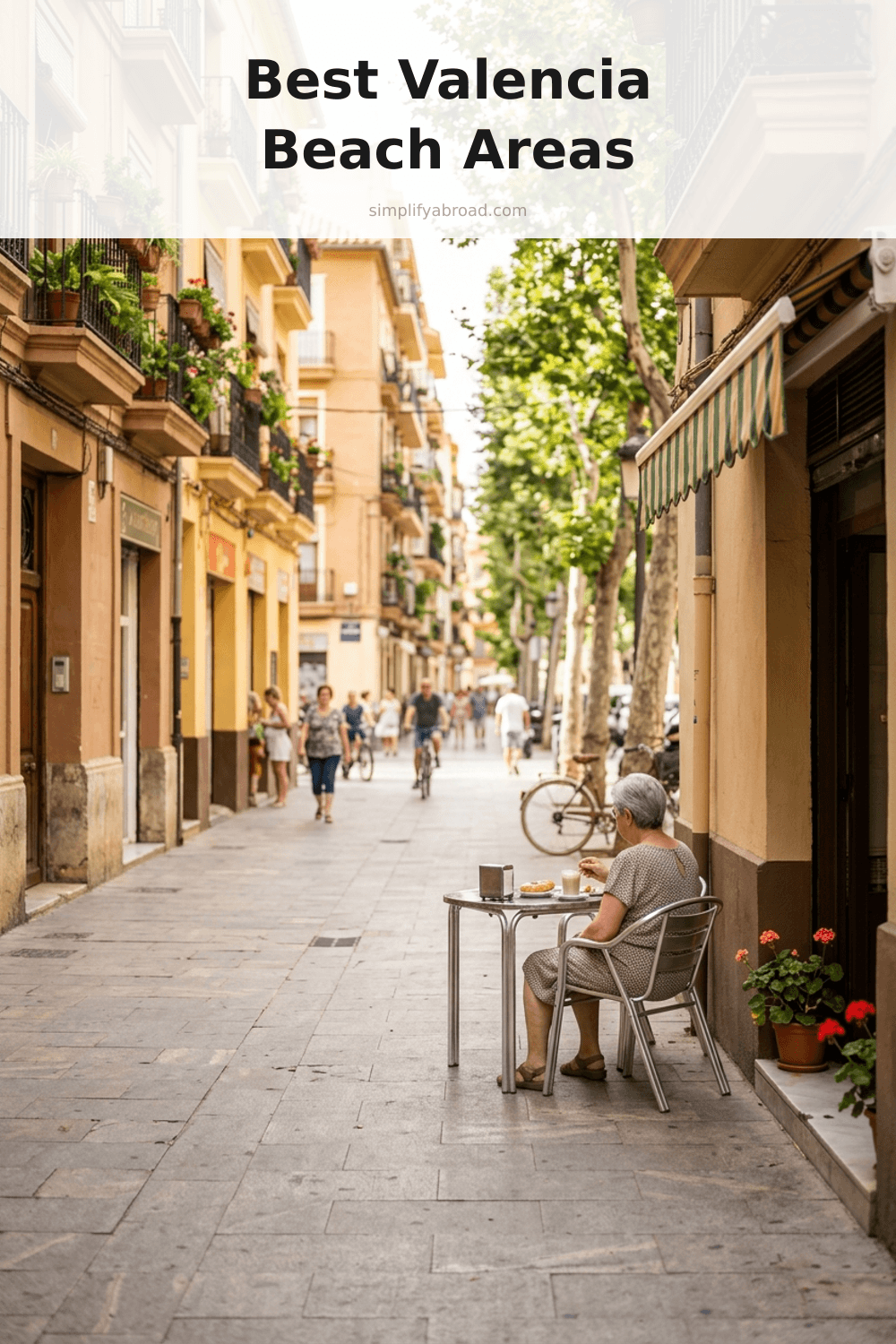
Arrancapins is one of our favorite areas in Valencia and honestly almost beat out our current neighborhood as our top choice when we were deciding the best area to live in Valencia with kids. We tried to move there and would’ve been happy living in Arrancapins; the only real dealbreaker for us was the distance to the Turia for our dogs.
The first thing that stands out in Arrancapins is how open it feels.
The sidewalks are extremely wide, around 10 feet in many spots, which makes walking around feel relaxed instead of cramped. Compared to busier, more touristy zones like El Carmen and the beach, Arrancapins has a much more chill, low-key vibe. Even around 11 a.m., it doesn’t feel crowded or hectic. You’re not dodging big groups or weaving through people all the time, which is a big plus with kids or if you just want something calmer.
Day-to-day life there is really appealing. Arrancapins has cute, low-key shops and great restaurants, and food is noticeably cheaper than in our Colón area. For things like menú del día, we’ve consistently seen prices roughly 10–20% lower than what we pay near Colón. If you’re an expat trying to keep your monthly costs under control, that 10–20% difference adds up pretty fast.
For families, Arrancapins makes a lot of sense. There’s a dedicated sports complex in the neighborhood, which is a big plus if you’ve got kids’ sports and activities to think about. For us, that felt like a real advantage compared to having to go into the Turia or across bridges for classes in other areas. You’ve got that structure and convenience built in, instead of always commuting for every activity.
On the connectivity side, Metro options in Arrancapins are good, though not quite as convenient as in Colón. Arrancapins sits in a nice middle ground: central enough that you’re not isolated, but not in the busiest, most touristy core. For us, if we didn’t have dogs and that daily Turia routine, Arrancapins would’ve been a very easy “yes.” As it is, we still see it as one of the most underrated Valencia neighborhoods if you want calmer streets, wide sidewalks, and slightly cheaper food.
7. Penya-Roja and City of Arts and Sciences, Modern, Spacious, and Close to Turia
Penya-Roja is one of the best options if you want a modern, more spacious feel, easy access to the Turia, and prices that are lower than the very center. It sits down by the City of Arts and Sciences and is close to two major malls, so day-to-day life there is very “everything you need is here.”
We have friends who live in Penya-Roja in modern buildings, and they generally have more space than you’ll find in a lot of the more central areas like Colón or Gran Vía. You’re trading a bit of that “in-the-middle-of-everything” feeling for bigger apartments, newer construction, and a more modern neighborhood layout. Overall, Penya-Roja is cheaper than our Colón area while still offering lots of shopping and things to do.
One of the standout things about this area is how compact everything is around the City of Arts and Sciences.
From one mall in the area, you can stand on the balcony and see the other mall and the City of Arts and Sciences. We’ve actually done a walking tour through the Turia down into the City of Arts and Sciences and both malls, and it really shows how connected everything is on foot. With kids, that kind of walkable loop with parks, museums, and shopping all together is a big plus.
For green space, Penya-Roja is hard to beat. The neighborhood is very close to, and in some places touches, the Turia park. If you have pets, that immediate access matters a lot compared to areas where you’ve got a longer walk just to reach the park. You can basically step out, cross a street or two, and you’re on the paths.
Public transportation in Penya-Roja is good, and you’re also one step closer to the beach compared to the city center. So if you’re torn between the beach and the city center, this is kind of a middle ground: not on the sand, but definitely closer than Colón or El Carmen, with easy connections in both directions.
Architecturally, it’s not as uniform as some other neighborhoods. The built environment is a bit of a patchwork: it goes modern, then older, then modern again. We’d describe it as a bit of a “mod podge” of modern and older buildings, unlike the more consistently historic El Carmen or consistently upscale Gran Vía. Just below it is Natzaret, the one area we’d skip at night (more on the safest neighborhoods in our post on whether Valencia is safe).
8. El Cabanyal and Valencia City Beach, Best for Beach Lovers and Short Stays
If you want to be on the sand and you’re only in town for a few days, El Cabanyal and the Valencia beach area are the best area to stay in Valencia near the beach. This is Valencia’s main beachside neighborhood, and it’s a really popular choice for tourists who care more about waking up near the water than being in the historic center.
We stayed in El Cabanyal for 2–3 days on our first visit to Valencia, and for a short stay it did exactly what we wanted. Waking up and hearing the ocean was a big emotional plus for us, especially coming from Hawaii. This is where I’d point beach lovers, families who want easy sand access, and anyone who just wants to walk out and be on the boardwalk.
Valencia’s city beach itself is actually pretty nice for a city beach.
The boardwalk is wide and in summer it’s packed with people running, biking, and exercising. In terms of Spanish city beaches, we did not care for Alicante’s city beach at all, Málaga’s city beach was fine, and Valencia’s was actually pretty nice, I’d put it in the same conversation as Málaga’s and clearly above Alicante’s.
There are a few trade-offs though, especially if you’re thinking about a longer stay. Outside of summer, the whole Valencia beach area quiets down a lot and can feel like it kind of “dies down.” The vibe is very touristy and seasonal compared to the more year-round, lived-in neighborhoods closer to the city center. Food-wise, the restaurants along the beach are just okay. They’re fine for a few days, but they’re clearly geared toward tourism, and prices tend to be a bit more expensive because of that, though not outrageously so.
A few streets back from the beach, the streets don’t look as nice as many inner-city Valencia neighborhoods. That contrast is a big part of why we personally wouldn’t choose El Cabanyal as a long-term base. For a 2–3 day beach-focused stay, El Cabanyal and the Valencia beach area are great. For living, we’d rather be closer to the city center and treat the beach as a place we visit, not where we’re based. It’s only about a 20-minute bus ride from the center.
Is There Anywhere a First-Time Visitor Should Skip?
Not really. Valencia is small enough that you can see most of it in three to five days, even with a beach day in there: the old town, the city center, the soccer stadiums, Gran Vía and its restaurants, the city beach, a paella cooking class, and the City of Arts and Sciences. It’s all worth it.
Thinking about more than a visit? If you are moving here as an expat family, here’s our take on where to live in Valencia as a family.
How to Use These 8 Areas to Plan Your Valencia Stay or Move
Use these eight areas as your base map for Valencia, whether you’re here for a quick trip or you’re quietly assessing, “Could we actually live here?” They’re the core neighborhoods we’ve either stayed in or scouted, and if we were planning again from scratch, this is exactly where we’d start instead of trying to research every single Valencia neighborhood on the internet.
If you’re visiting for a week or two, pick one of these as your home base and then compare as you go: beach vs city center, old town vs newer areas, more local vs more touristy. You’ll get a really good feel just by staying in one of these and spending time walking through the others.
If you’re in “moving to Valencia, where to live” mode and comparing the best places to live in Valencia, treat this list as your short list. Start with these eight, walk them, ride the tram or Metro through them, sit in the plazas, and then branch out once you’ve got your bearings. From any of these areas, it’s easy to explore other parts of the city once you’re on the ground.
Beyond this core list, there are definitely other great places in Valencia. We do briefly call out Mestalla and the area above the Turia where the zoo is (the Bioparc area) as additional neighborhoods worth checking out later. Think of those as “second round” options: start with the eight we’ve talked about in detail, then, once you’ve seen those, add in places like Mestalla and the Bioparc side of the river to see if they fit how you want to live.
The big thing I want you to take away from this is that there’s no single “best” area in Valencia; there’s just the area that lines up with how you actually live. Use these eight neighborhoods as a starting point, then pay attention to your own non‑negotiables, whether that’s the Turia, the beach, nightlife, or just having a big enough living room. Once you’re clear on that, it gets a lot easier to ignore the noise and pick a part of the city that will actually feel like home, not just a pretty place on a map.
Frequently Asked Questions
What is the best area to stay in Valencia with kids?
For us, the Colón area or Gran Vía: central, a bit quieter, close to the metro, the buses and the Turia park. Near Estació del Nord works well too.
Is it better to stay at the beach or in the city center?
The city center if you want to explore, the beach if you want to relax. For a real beach vacation, look about 20 minutes outside the city.
How many days do you need in Valencia?
Three to five days covers most of it, including a beach day.
Is El Carmen a good place to stay?
It’s beautiful and great for nightlife, but it stays loud late. With kids, we’d stay nearby and walk in.
What should you look for when choosing a neighborhood in Valencia?
For us it was Metro access (we don’t have a car), how close the Turia park is for the kids and dogs, food within walking distance, noise, and rent.
Is it hard for a big family to rent in Valencia?
It was for us. With four kids and three dogs, a lot of listings were out, and in the Plaza de la Virgen area we were told no several times, mostly because of the four kids. Colón is where we found a place that worked.
Does it cost less to live in Valencia than in the US?
For us it has been. Our rent in Colón, which locals call probably the most expensive area of Valencia, is still lower than what we paid for a townhome in somewhat rural Ohio.
The Moving to Spain & Europe Guide
70+ pages on moving a family to Spain: the visas compared, the 90-day countdown, schools, and your first 30 days.


