
Gijón, Spain With Kids: Beaches, Boardwalk & One Big Flaw

Gijón was the stop on our northern Spain road trip that we were the least sure about going in, and the one we’re still the most conflicted about now. We’re an American family of six living in Valencia, and we’d already fallen hard for places like Oviedo and the green, dramatic coastline up here in the north. So when we pulled into Gijón in September, listening to the waves and seeing that bright green hit the ocean, we were ready to love it… but something felt a little off in those first 24 hours.
Here’s exactly how Gijón landed for us with kids: the younger, family vibe compared to Oviedo, the boardwalk that totally won us over, the beaches that finally impressed a guy who grew up in Hawaii, and the one big flaw that kept it from becoming a top city for us in our Gijón Spain with kids review.
Key Takeaways
-
Gijón offers impressive beaches and a scenic boardwalk, making it appealing for family outings.
-
The city has a younger, more family-oriented vibe compared to Oviedo, which may attract families with children.
-
Despite its positives, Gijón didn’t resonate as strongly with the family as Oviedo did, indicating a preference for the latter.
Arriving in Gijón: First Impressions From the Northern Spain Coast
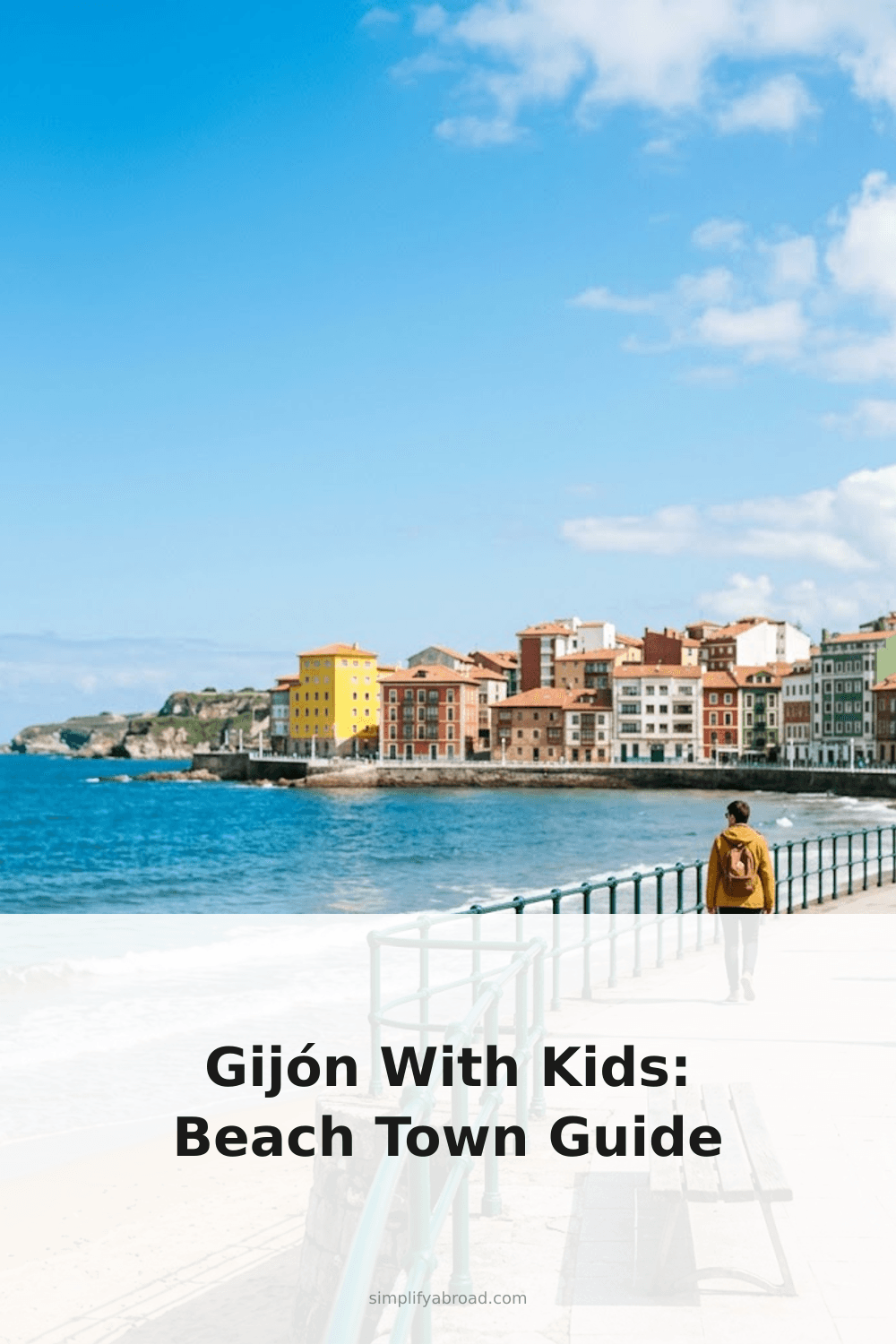
For this trip, Gijón was our first real hit of the northern coast.
It was our first stop on the water on this road trip, and our first impression was basically: it’s still really green, the ocean’s right there, and it feels very different from our life in Valencia. We came in September, so it had that “end of summer but not quite fall” feeling that fit the area really well. Northern Spain in general stays pretty green, which we love, and Gijón fits that picture.
On our route, it was part of that little triangle with Oviedo and Avilés, a classic northern Spain family travel combo. We were based in Oviedo and took the bus over to Gijón, about 30 minutes and just a dollar or two. In our heads, it wasn’t some huge relocation; it was more like, “Okay, let’s hop over to the coast and see what this side of Asturias feels like.” That short ride set up the comparison for us away: Gijón vs Oviedo, city by city, with kids in tow, and how each one really feels for families.
Coming from Valencia, the first 24 hours in Gijón really hit Mike. He kept saying how much he loved having a little bit of rain and being able to hear the ocean again. Valencia has its own thing going on with the Mediterranean and a totally different climate and vibe, so landing somewhere that could actually be gray for a bit and had a more rugged coastline was a noticeable shift. It felt like, “Okay, this is northern Spain. This is the green, rainy, on-the-ocean version people talk about.”
At the same time, as we walked around, we both realized pretty quickly that Gijón probably wasn’t going to end up as our favorite stop. We’d already spent time in Oviedo, and when we compared the two, we liked Oviedo more overall as a city. That was just our honest reaction moving through both places with the kids. It’s not that we disliked Gijón; we just preferred some of the other northern cities.
That said, there were things we genuinely liked away in Gijón, especially for a family trip. The beaches jumped out as a big plus, especially if you’re thinking about the best Gijón beaches for families. The boardwalk along the water was another thing we noticed immediately, and it became a big part of our experience. And the food landed on the “pro” list pretty fast too.
Why Gijón Feels Younger and More Family-Oriented Than Oviedo
Gijón immediately felt like it had a younger crowd than Oviedo, mostly in the sense of more younger families with kids out and about. Walking along the boardwalk and through the central streets, we kept seeing strollers, toddlers on scooters, kids playing near the beach, the kind of everyday family life we’re really used to in Valencia.
Oviedo, by contrast, was definitely an older crew. It felt more traditional overall, and what really stood out was how few children we saw compared to what we’re used to. Coming from a city where kids are everywhere at all hours, that difference was pretty noticeable. Gijón didn’t reach Valencia levels of “kids in every direction,” but it felt much closer to that than Oviedo did, especially around the seafront and the more lived-in neighborhoods.
One thing that makes this less of a big decision point is how well connected Gijón and Oviedo are by bus. It’s very easy to live in one and go to the other, so you don’t really have to choose between “younger and more family-oriented” Gijón and “older and more traditional” Oviedo forever. You can base yourself where the vibe fits your day-to-day life and still hop over to the other whenever you want a change of scene.
If you’re planning a longer stay and juggling money between currencies like we do, especially if you’re coming from outside the eurozone, tools like Wise International Bank have made it way easier for us to move dollars into euros without getting crushed on fees while we bounce between cities in northern Spain.
Falling in Love With Gijón’s Oceanfront Boardwalk
The first place we really connected with Gijón was on the oceanfront boardwalk.
I’d been saying I “couldn’t wait to just kind of skip through the town and go to the boardwalk,” and that’s basically what we did. We headed straight toward the water, and the second we hit the promenade, it clicked for both of us: okay, this is why people love Gijón.
We were there in September, so the temperature was comfortable and there was a cool ocean breeze coming off the Atlantic.
It wasn’t hot or sticky; it just felt good to be outside. The boardwalk itself was pretty and well maintained, and the whole stretch had this calm, chill energy that made us instantly slow down.
I’d been talking about getting to the water, so of course I had to go feel it. I walked down, put my feet in, and immediately called it “super cold.” I’m very clear about my ocean preferences: I won’t go in unless it’s “bath warm.” So this was a feet-only situation for me. That cold Atlantic water was a big contrast to the warmer places where I’ll actually swim, and it really drove home how different this felt from a typical hot beach day.
Instead of swimming, we leaned into the boardwalk. We grabbed coffee, found benches, and just sat for a while watching everything happening around us. We took our time walking from one side of the boardwalk to the other. The whole promenade felt like a daily routine spot for locals more than a big tourist attraction.
Everywhere we looked, there were people running, jogging, exercising along the path. Families were walking together, kids weaving around, and a steady stream of people grabbing ice cream as they went by. It was active but still calm, which is kind of the best combination when you’re there with kids or just trying to get a feel for a place. On a rainy, windy day I think the boardwalk would feel totally different, but because we had decent weather and that cool breeze instead of a storm, we got the best version of it.
By the time we’d wandered the full length of the promenade, I’d decided this was my personal favorite part of Gijón and a standout Gijón boardwalk family experience. If you’re comparing Gijón vs Oviedo with children, this oceanfront boardwalk is a big point in Gijón’s favor. It’s an easy, low-effort, high-reward walk where you can let the kids run a bit, sip a coffee, and enjoy that relaxed oceanfront vibe.
Eating in Gijón: Big Portions, Great Meat and Fish, Local Prices
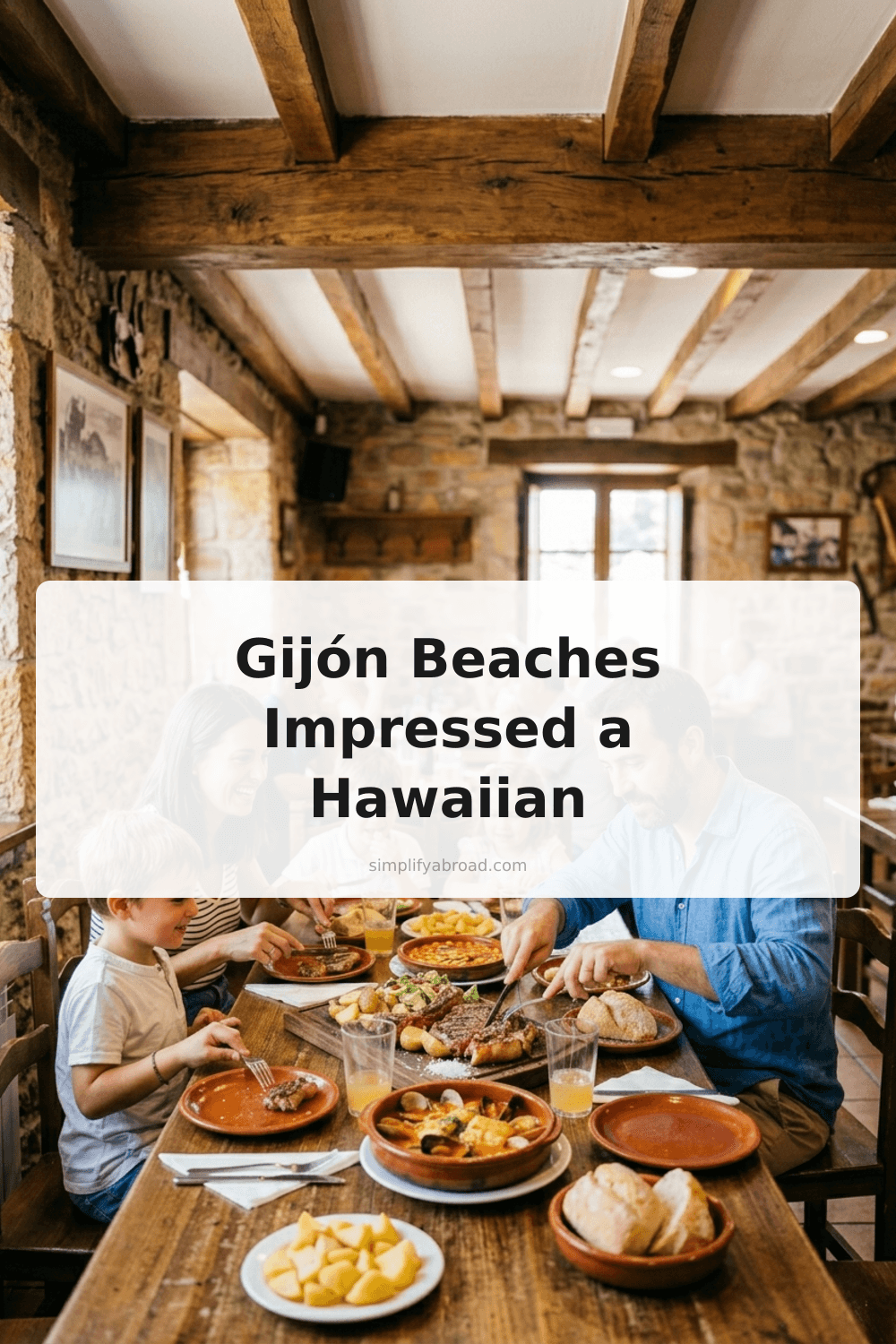
Food is always a big part of how we experience a city, and in Gijón we both walked away saying the same thing: the food was very good. Not necessarily better than Oviedo, but different enough that we kept talking about it afterward.
The standout for us in Gijón was the meat and fish.
Mike kept saying the meat and fish there were “better than what we get here in Valencia,” especially when it came to steak. He finally had a steak in Gijón that he actually liked, after struggling for a long time to find a decent steak in Valencia. He was joking at one point that maybe Valencian steak doesn’t have “enough growth hormone,” compared to what he’s used to from the States, but underneath the joke was this real reaction of, “Oh, this is what I’ve been missing.” The fish hit that same note for us: simple, good, and better than what we’re used to day-to-day in Valencia.
We weren’t chasing anything fancy to get that experience. We literally just typed in what we wanted to eat and went to whatever was nearby. No hunting down top-rated places, no Michelin-starred restaurants. The spots we ended up in were very much “hole in the wall” and “average bar cafe food,” but still “very very good.” That was kind of the theme: you sit down somewhere that looks completely normal, order something basic, and it comes out tasting better than you expected for what feels like a regular neighborhood place.
Portion sizes in Gijón were big, which lined up with this general trend we noticed across northern Spain. If you’re looking at Gijón vs Oviedo vs Bilbao with kids or as a family, and you care about how far a plate of food goes, this is where the difference shows up. Oviedo had the biggest portions of all, with what we’d call “massive, massive plate sizes.” Gijón also had big portions, very much in that northern Spain style, and then Bilbao’s portions were still big but not as extreme as Oviedo.
On the price side, Gijón felt reasonable, especially if you got even a little bit away from the water. Along the boardwalk, prices were “a little higher,” but they weren’t “outrageous” or “touristy high.” It was more like: you know you’re paying a bit extra for the location, but you’re not getting gouged. Once you step back into the local neighborhoods, it shifts back into normal, local pricing that makes it pretty easy to eat out as a family without stressing about every bill.
Discovering Gijón’s Beaches: When a Hawaiian Finally Gets Impressed
Our absolute favorite part of Gijón was the beaches, specifically the ones that are not in the city center, which we’d rank among the best Gijón beaches for families.
The big turning point of the trip was when we finally left the city beach and drove out about 15 minutes to see what was actually around Gijón. That 15 minutes made a huge difference for us. The magic, for us, was not on the main city beach or on the Gijón boardwalk. It was at the beaches that are about a 15-minute drive away.
We ended up at two different beaches near Gijón, and those two completely changed how we felt about the area with kids.
Up until then, we liked the city, the boardwalk was nice, but it felt similar to a lot of other coastal cities we’ve seen in Europe. Once we drove those 15 minutes out of town and hit those two beaches, it suddenly clicked why people talk about the best beaches near Gijón and why people compare Gijón vs Oviedo with children and pick Gijón for the coast.
Context matters here: I’m from Ohio. I always joke that I’m less picky about beaches because of that. I genuinely think all beaches are beautiful. I don’t always go in the water, but I’m happy just being there, looking at the waves, sitting in the sand. So when I say I liked these Gijón beaches with kids, that’s kind of expected from me. I’m easy to please when it comes to the ocean.
Mike is the opposite. He grew up in Hawaii, and he’ll straight up say that coming from Hawaii, “nothing impresses him.” We’ve traveled around Europe for years now and seen a lot of beaches. I’ll be standing there going, “This is so pretty,” and he’s usually like, “Yeah, it’s fine,” and that’s about as far as it goes. So when we talk about European beaches, he’s usually not handing out compliments.
That’s why these two beaches near Gijón were such a big deal for us. We went to two in particular that stood out from other European beaches we’ve seen, and they were the first two beaches in a long time that really impressed Mike. His actual words were that they were “absolutely stunning” and “pretty good,” which, if you know him, is basically a rave review. He’s not saying they’re better than Hawaii, but he did put them in that small category of beaches outside Hawaii that genuinely impress him.
For me, it just confirmed that Gijón beaches, especially the ones not in the city center and about a 15-minute drive away, are some of the best beaches near Gijón for families. For him, it was the first time in a while that a place in Europe made him stop and go, “Okay, this is actually absolutely stunning.” That combination, me thinking all beaches are beautiful and him, the Hawaiian who says nothing impresses him, calling these two beaches pretty good, was the moment Gijón really won us over.
If you’re documenting trips like this and trying to keep up with blogs, newsletters, and social at the same time, tools like ContentFold can actually help you repurpose your travel videos into written content without spending hours at a laptop after beach days like these.
Free guideThe Moving to Spain & Europe GuideGet it free →The Dinosaur Beach Near Gijón: Fossils, Streams and Sea Glass With Kids
Our first beach day near Gijón was at what everyone kept calling the dinosaur beach, and it ended up being one of those spots where we just lost track of time as a family. It stands out because it’s so much more interactive than a typical flat city beach.
If you walk all the way to the far side of the sand, that’s where people pointed out the “old fossils or footprints or something.” We’re not paleontologists, so that’s exactly how we described it, but it was fun for the kids to know, “Okay, this is the dinosaur side.” It ties into all those “dinosaur footprints beach Asturias” searches you see, and it gave the whole place a different feel than just a normal swim-and-go-home beach.
What really hooked our kids, though, were these little channels that cut across the sand.
They weren’t big rivers, more like “little like riverish” streams running down toward the ocean. The water was shallow, moving just enough that you could see it carving paths through the sand. Our kids locked onto that immediately and turned it into an all-day engineering project.
They started digging, building barriers, trying to block the flow and then redirect it. At those streams, they “easily spent 2 hours, easy 2 hours, maybe 3 hours” just focused on building dams and making the water go around their sand walls. For them, that was the whole beach day. For us, it was one of those parenting wins where you’re not really doing anything fancy, but everyone’s completely absorbed and happy.
For Mike, watching them there was super familiar. He connected it straight back to his own childhood in Hawaii, where he loved blocking streams and making the water go around sand barriers. Seeing our kids doing the exact same thing on this beach in Asturias was like watching his childhood repeat itself, just on the other side of the world.
In between all the stream engineering, we also hunted for sea glass. This is one of those “sea glass beach” kind of spots. The kids “found a lot of sea glass,” enough that it turned into its own little treasure hunt. So we’d bounce between the “little like riverish” streams, the “old fossils or footprints or something” on the far and pockets of sea glass along the shore.
By the time we finally left, we’d spent “so much time there” in a single day. It wasn’t about big waves or fancy facilities; it was that combination of fossils, streams, and sea glass that made it feel really kid-focused and hands-on. Compared to typical flat city beaches you might hit off the Gijón boardwalk, this one stood out for us as a genuinely great family experience.
🎬 Check out Original Content
Click above to experience the full content!
The Hidden Valley Beach: Cafés on the Stairs and a Chilled-Out Atmosphere
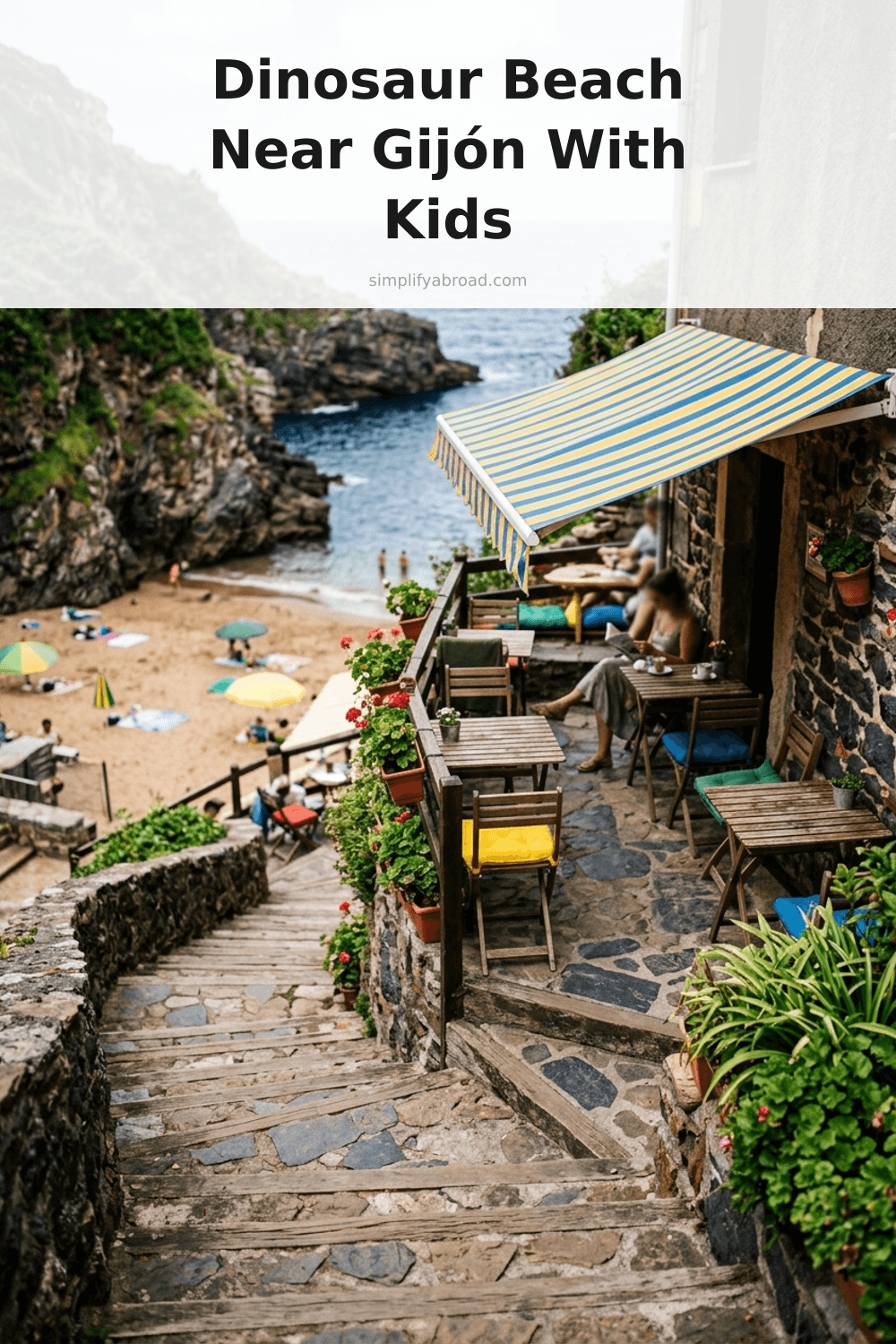
The second beach we went to ended up being one of our favorite spots of the whole trip, partly because of the setting and partly because of the atmosphere.
This one started with a drive. We went “a little further up,” then “up basically like the hill,” parked at the top, and from there you walk all the way down into this valley to get to the sand.
The walk down is what really stuck with me. As you start going down the stairs, it’s not just one long staircase. You go down one set of stairs, there’s a cafe, and then you go down another one and there’s a cafe. It feels like the whole descent is layered with these little stops where people are already sitting, talking, having something to drink, and looking out over the valley and the ocean. By the time you get to the bottom, you’ve already passed through a couple of different pockets of people hanging out.
When we got there, it was chilly. It wasn’t one of those blazing hot beach days, and you could see that in how people were using the space. Not everyone was in the water. A lot of people were playing in the sand or just hanging out. There were people in normal clothes, not swimsuits, with their chairs and card tables set up on the sand. It felt less like everyone was there “for a beach day” and more like they’d brought their living room outside and dropped it on the shore.
Music was playing in the background, and between that, the conversations, and the way people were spread out in groups, the atmosphere was awesome. Compared to a typical tourist beach where everyone’s mostly in bathing suits and focused on swimming or tanning, this felt more like a community living room. You could tell there were a lot of locals, and a lot of them were just there to be together, fully dressed, talking, playing cards, watching the water.
For our kids, the big thing here, like at the dinosaur beach, was the water running into the ocean. This one had what we described as a “full river going into the stream,” and they locked onto that immediately. They were back to playing and building in the water for hours, just like they had with the stream at the dinosaur beach. So from a family perspective, this valley beach checked that same box: safe, shallow moving water where kids can dig, redirect the flow, and stay busy without needing to be out in the waves the whole time.
Putting it all together, this hidden beach near Gijón was a really different side of the whole experience compared to the main boardwalk or even Oviedo. The valley setting, the way you go down one stairs and there’s a cafe and then you go down another one and there’s a cafe, the people in normal clothes with their chairs and card tables, the music, the atmosphere, and that full river going into the stream for the kids, this one felt like a social hub as much as a beach, and that’s what made it stand out.
Why Gijón’s Shallow Atlantic Shelf Is Perfect for Kids (Even If the Water’s Cold)
The thing that really sold us on the Gijón beaches with kids wasn’t just how they looked, it was how the water actually behaved.
The beaches we visited near Gijón have a massive shallow shelf, and that changed our comfort level as parents away. Mike went out to test it and said he walked out “as far as I could” and could have kept going, but got tired and turned back, knowing the kids would never go that far. Even out there, he estimates the depth at about “a meter, 3 ft type of deep,” which gives you a sense of how gradual that drop-off is.
From the kids’ perspective, that meant they could run out “25, 30 yards” and still have “another 50 yard beyond them” of shallow water.
So if you’re wondering about safety, that huge shallow area made these beaches feel very different from a typical deep, sudden Atlantic beach. It’s one of the big reasons we’d put them on a list of the best beaches for families in this area.
The tradeoff is that the water was “a bit colder cuz it’s the Atlantic compared to like the Mediterranean Sea.” So if you’re comparing this to something on the Mediterranean, you’ll notice that difference. But the kids didn’t actually spend most of their time in the open ocean anyway.
They naturally gravitated to the little streams and rivers that cut across the sand. Those were “more like compact and they’re shallow,” and because of that they were warmer than the ocean and just more comfortable for little kids to play in. For us, that combo was kind of ideal: a huge, shallow, kid-friendly Atlantic beach there, plus these warmer, contained streams that felt safer and easier for small kids. It made a big difference in how relaxed we felt.
Our Honest Take on Gijón’s City Center: Charm, Grit, and a Rustic Future
We did not love Gijón, like the city itself. Certain parts were nice, and we’ll definitely give those credit, but as a city center overall, especially when we compare it to Oviedo and Valencia, it just didn’t land the same way for us. And to be super clear, there was nothing about safety that bothered us; we didn’t feel unsafe or anything like that. It wasn’t a safety issue. It was more about how the city felt block to block.
Coming from Oviedo, the contrast was pretty stark. Oviedo felt so clean and quaint. It has this reputation as one of the cleanest cities, and you really feel that walking around. The streets, the buildings, the overall vibe, it all felt consistently “pretty darn nice” to us. Valencia, in its own way, also felt pretty darn nice. Different style of city, obviously, but in both Valencia and Oviedo, we weren’t bouncing between “oh this is lovely” and “huh, this is kind of rough” every few minutes.
In Gijón, that inconsistency was the main thing we noticed.
You’d be walking through a section that looked new and modern and really clean, and then next to it there’d be a section a bit more rundown and not so clean. You’d turn a corner and suddenly you’re in a cute, quaint area, and then the next block over is kind of run down again. It was this constant back-and-forth: nice, then not so nice, then cute, then kind of rough.
We never felt like we had that same “ah, this whole area feels great” reaction that we had in Oviedo’s center. In Oviedo, the cleanliness and the quaintness felt really consistent. In Gijón, those cute, quaint areas exist, but they sit next to less appealing blocks, and that made the city center feel a little disjointed to us. Again, not unsafe, just visually and atmospherically mixed.
Because of that, we both started wondering if Gijón might be in some kind of revitalization phase. We don’t know the details, so this is just us guessing based on what we saw, but it kind of had that in-between look: some things clearly updated and looking good, and other things that felt like they were still waiting their turn. We’ve heard that Avilés is more of an industrial town, and it wouldn’t surprise us if Gijón shares some of that industrial past, which might explain why parts of it feel more worn in.
The best way we can describe it is that Gijón almost felt like a rustic feel to the city, like a hip rustic kind of vibe. Not polished, not “perfect postcard” like Oviedo, but more rough around the edges in a way that could actually be cool if it’s embraced and cleaned up thoughtfully. Mike even said if you told him in 10–20 years Gijón turned into a hipster town, he could easily see that. With the beaches, the boardwalk, and that rustic base, it has the bones for that kind of future.
Our Final Verdict on Gijón: Go for the Beaches, Stay for the Vibe (But Know the Trade-Offs)
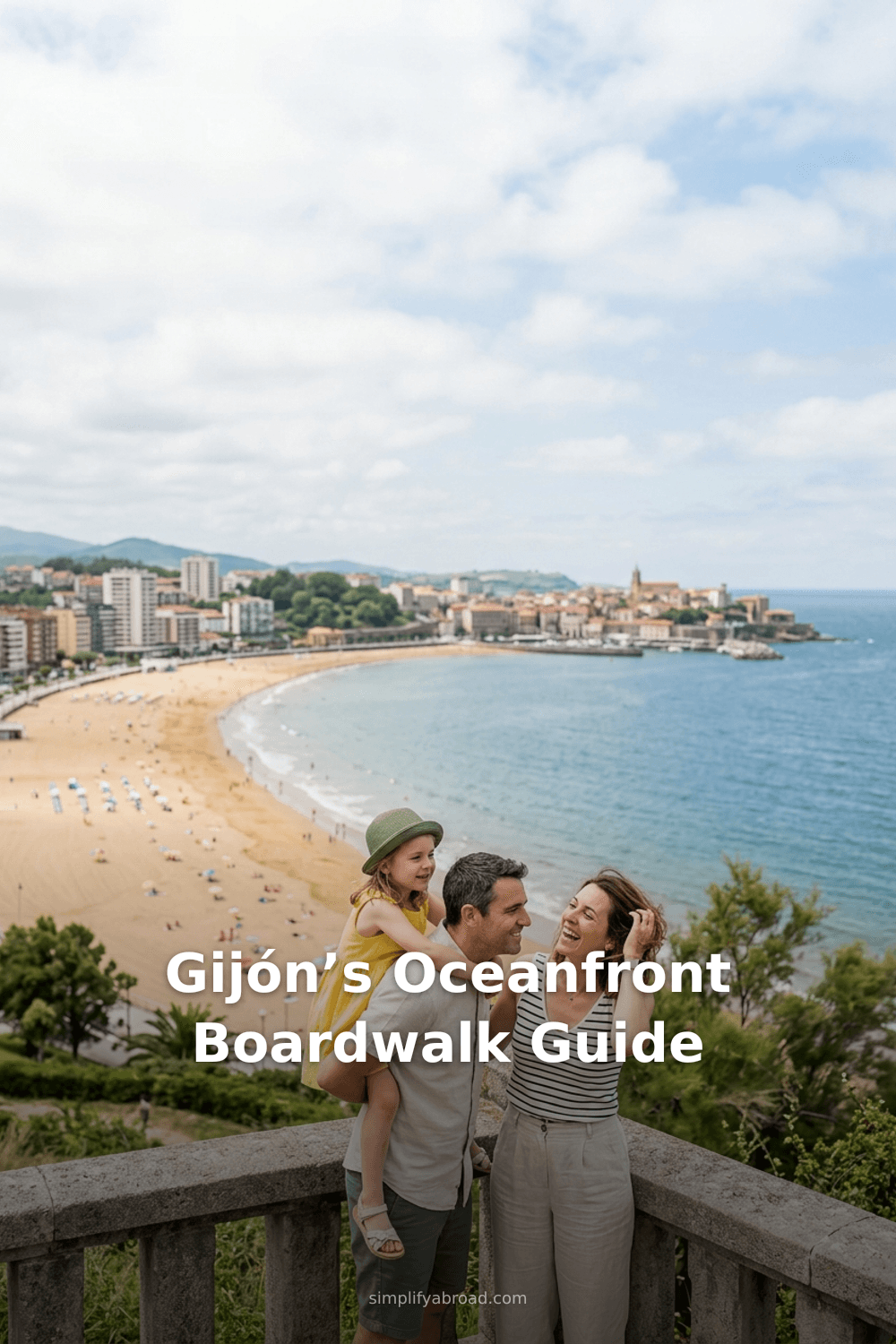
If I had to sum up Gijón in one line, it would be: go for the beaches, stay for the vibe, but know that the city center is a bit of a mixed bag if you’re comparing Gijón vs Oviedo with children.
Overall, we liked Gijón a lot. For us, the standouts were the food, the beaches, the boardwalk.
Those three things really carried the experience and made it feel worth the stop, especially if you’re traveling with kids and want that mix of green hills, ocean air, and big northern Spain portions. Once you’re actually out by the water, walking along the coast, or sitting down for a meal, it just works.
The main negative for us was the inconsistency and occasional rundown feel of the city center. That was really the only thing that held us back from fully falling in love with the city. There were parts that felt nice, and then you’d turn a corner and it just didn’t match. Compared to somewhere like Oviedo, where the city center feels more consistently put-together and charming, Gijón’s center just didn’t hit the same way. But beyond the city-center issues, we didn’t really have any other complaints about Gijón. Day to day, we were comfortable, we ate well, and we spent a lot of time outside.
When we look at the whole trip, we loved Gijón, Oviedo, and Bilbao as a trio of northern Spain stops. They each did something different for us. Oviedo was the one where the city center felt nicer. Bilbao had its own thing going on. And Gijón was the one where the coast really stood out. If you’re trying to decide Gijón vs Oviedo with children, Gijón wins on beaches and that coastal boardwalk energy, while Oviedo wins on a more polished center. Together, they make a really solid northern Spain itinerary.
We can clearly see why people from the south, Alicante, Valencia, anywhere really south of Valencia, head up north in summer. Northern Spain is so beautiful. It’s green. It’s not as hot and the beaches are stunning. When you’re standing on the sand in Gijón, looking at the water and the hills behind it, it’s obvious why this whole stretch of coast is turning into a go-to summer destination. If you live in the south and you’re just trying not to melt for a few weeks, this makes sense.
By the time we packed up the car and headed toward Bilbao, Gijón had become this really specific mix in our minds: beaches we’d happily go back to again and again, a boardwalk we genuinely loved, and a city center that we liked in moments but never fully clicked with. If you’re planning a northern Spain trip with kids, I’d say Gijón is absolutely worth it for the coastline and the relaxed, local feel, as long as you go in knowing you’re trading a bit of polish for that rustic, lived-in vibe and a more family-friendly Gijón beach scene. For us, it’s a place we’re glad we experienced, and one we’d return to for the beaches first and the city second.
Frequently Asked Questions
What are the main attractions for families in Gijón?
Gijón offers impressive beaches and a scenic boardwalk that are perfect for family outings. The city also has a younger, more family-oriented vibe compared to Oviedo, making it appealing for those traveling with children.
How does Gijón compare to Oviedo for families?
While Gijón has a lively atmosphere with more families out and about, our experience showed that we preferred Oviedo overall. Gijón felt more casual and family-friendly, but Oviedo resonated more with us as a city.
Is Gijón easy to reach from Oviedo?
Yes, Gijón is easily accessible from Oviedo, with a bus ride taking about 30 minutes and costing just a dollar or two. This makes it convenient for a quick day trip or a family outing.
What was the biggest flaw we found in Gijón?
Despite its positives, Gijón didn’t resonate as strongly with us as Oviedo did, which we found to be a more enjoyable city overall. The one big flaw was that Gijón just didn’t capture our hearts in the same way.
How was the weather during our visit to Gijón?
We visited Gijón in September, which had a pleasant “end of summer but not quite fall” feeling. The occasional rain and cooler temperatures were a refreshing change from the Mediterranean climate of Valencia.
The Moving to Spain & Europe Guide
70+ pages on moving a family to Spain: the visas compared, the 90-day countdown, schools, and your first 30 days.


