
How Much Does a Switzerland Trip Cost for a Family of 6?

Switzerland has a reputation for being beautiful… and brutally expensive, especially if you’re bringing kids.
We’re a family of six living in Spain, and over our kids’ Easter break we decided to test that reputation with a 9–10 day trip through Zurich, Bern, Interlaken, Grindelwald, and Basel using only public transport.
We tracked what we spent every single day with a clear budget in mind to see if we could enjoy Switzerland without going into “this is ridiculous” territory.
In this post I’ll walk you through what we actually paid for flights, trains, food, activities, and accommodation, and how the Swiss Travel Pass worked for us with four kids. By the end, you should have a pretty realistic picture of what a Switzerland trip could cost for a bigger family and where you can save without feeling like you’re missing out.
Key Takeaways
-
A family of six can enjoy a 9-10 day trip to Switzerland while keeping daily expenses manageable by tracking costs for transport, food, and activities separately from lodging.
-
The Swiss Travel Pass can be beneficial for families, especially when using public transport to navigate cities and attractions efficiently.
-
Despite Switzerland’s reputation for high costs, careful budgeting and planning can allow families to experience the country without feeling deprived.
What We Wanted to Learn: How Expensive Is Switzerland With 4 Kids?
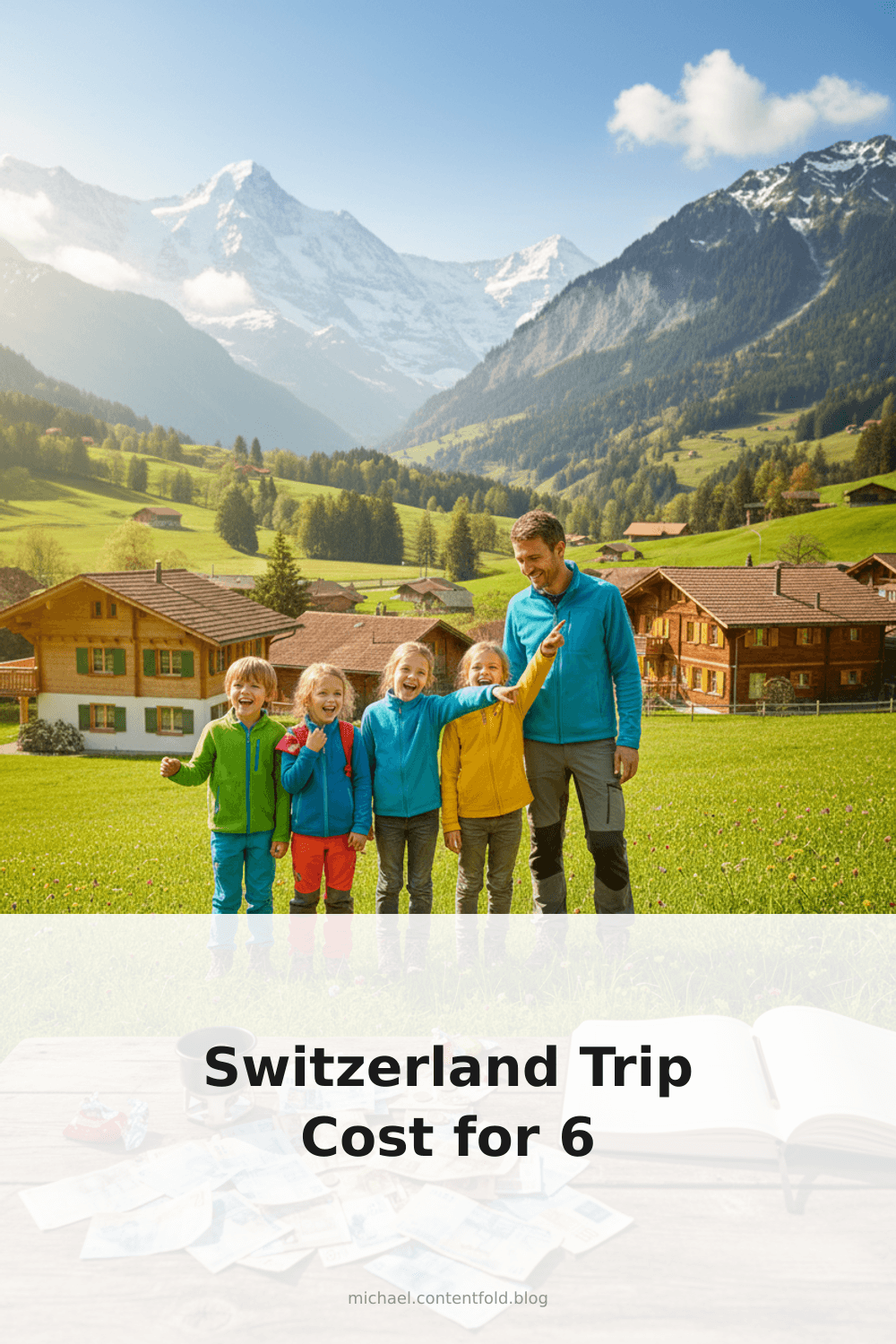
We went into this trip with one main question: how expensive is Switzerland if you’re a family of 6, and can you enjoy it without blowing your budget?
We weren’t doing a luxury splurge, but we also didn’t want to sit in an apartment eating pasta every day.
The goal was to see if we could have a real Switzerland experience with 2 adults and 4 kids over about 9–10 days, and keep our daily spending under control.
We traveled during our kids’ Easter break while we were living in Spain, which matters because we’d heard nonstop that Switzerland is very expensive, especially compared to Spain. Groceries, eating out, transport, activities, everyone kept telling us, “Switzerland is on another level.”
So we went in expecting a noticeable jump in prices and wanted to see how that actually felt day to day as a family of 6.
To keep things clear, we decided from the start that we’d track transport, food, and activities separately from lodging. Lodging can swing a lot depending on where you stay and how early you book, so we didn’t want that to blur the picture. Instead, we focused on what it costs just to exist and have fun in Switzerland once you’re there: getting around, feeding a family of 6, and doing the things you actually come to Switzerland to do.
Because we currently live in Spain, we naturally compared everything back to what we’re used to: Switzerland’s overall cost and ease of transport versus Spain, and Switzerland’s reputation for being extremely expensive versus what we actually experienced on the ground.
The whole point of this trip, and this breakdown, was to answer: Is Switzerland with kids actually out of reach for a bigger family, or is there a way to make a family of 6 Switzerland budget work without feeling like you’re missing out?
Our Switzerland Itinerary: 9 Days Across Zurich, Bern, Interlaken, Grindelwald and Basel
To make the numbers make sense, here’s the exact route we took and how we moved around Switzerland with kids.
We started by flying from Valencia (Spain) to Zurich on cheap round-trip flights. We’d originally considered doing a multi-city flight into Geneva and then building different train routes from there, but Zurich won purely because the flights were cheaper.
From Zurich we took trains to Interlaken, then Grindelwald, then Bern, then Basel, and finally back to Zurich before flying Zurich–Valencia.
We were in Switzerland for roughly 9 days total, and we used an 8-day Swiss Travel Pass that covered most of that stay. That pass is what we used to move between cities and also for local transport.
Most of our train rides between cities were around 1–2 hours. Going into the trip, we were a bit nervous about doing 3-hour rides with kids, but after using the system we found it so easy that we’d now be comfortable with 3–4 hour rides.
Throughout the trip we used trains, trams, buses, and ferries. We already thought Spain’s train system was very good, but we found Switzerland’s train system even better and easier, which made this kind of point-to-point route totally manageable as a family.
That’s the backbone of our Switzerland family itinerary and the context for all the costs we’ll break down.
Cheap Flights and Why We Chose Zurich as Our Base
Flights were our first big cost decision, and the main thing we optimized for was price across six tickets, not having the “perfect” airport.
We ended up getting cheap round-trip flights to Zurich from Valencia and then used trains for everything else instead of booking a multi-city itinerary.
The original plan was to fly into Geneva and then take trains from there, but when we actually went to book, Zurich flights were cheaper.
Since we were buying flights for all six of us, even a small price difference per ticket added up really fast, so the cheaper Zurich option won.
Round-trip flights to Zurich were cheaper than a multi-city flight plan that included Geneva, so we kept it simple and did round-trip instead of trying to fly into one city and out of another. That decision basically made Zurich our hub by default.
Zurich became our entry and exit point, and we used the train system to reach everywhere else we wanted to go. Using Zurich as the hub worked because the train system made it easy to reach Interlaken, Grindelwald, Bern, and Basel with 1–2 hour rides.
For us, the combination of cheap flights to Zurich plus straightforward train connections made Zurich vs Geneva flights an easy call for this Switzerland family trip.
When we’re booking trips in Europe in general, we usually move money between currencies ahead of time so we’re not getting hammered by bad exchange rates at the last second. Tools like Wise International Bank have been helpful for that, especially when we’re bouncing between dollars and euros while planning.
How the Swiss Travel Pass Worked for Our Family of 6
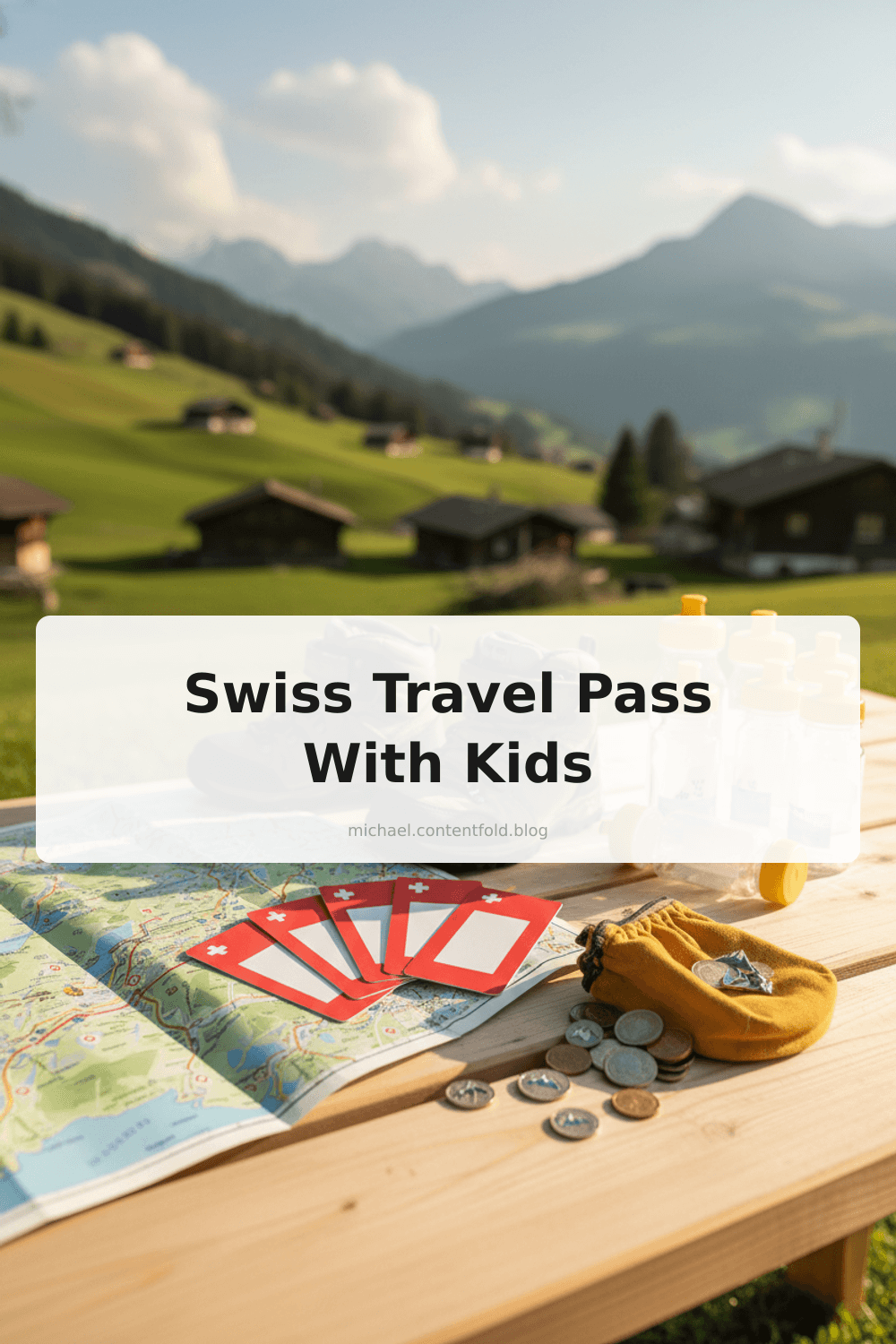
The Swiss Travel Pass (specifically the Swiss Family Travel Pass) was our biggest upfront cost after flights, but for our family of 6 it really did pay for itself through unlimited transport and museum entries, especially with four kids traveling free.
We bought an 8-day Swiss Family Travel Pass for the two adults. We were in Switzerland for 9 days, but we only needed the 8-day pass because day 1 was just a short train ride in Zurich and a hotel stay, so it didn’t make sense to “use up” a full pass day on that.
The pass cost about 380–400 CHF per adult, so for both passes we were at around 900–920 USD total. All four of our kids traveled completely free on the pass, which is where the value really started to add up for us.
Once we had the passes, we used them constantly. The Swiss Travel Pass covered trains, trams, buses, metros, and ferries across Switzerland, so practically every time we moved around the country, we just walked on and sat down. We could just hop on trains and buses without buying individual tickets, trading a bit of potential savings for a lot of peace of mind.
We might have been able to find slightly cheaper individual tickets if we really optimized every route, but for a larger family, the pass still clearly paid for itself. Compared to buying separate tickets for six people plus museum entries, the pass was a better value and far less stressful.
The pass itself is very old-school: it’s a physical paper ticket that goes into a plastic protector, and you have to keep it on you. We were checked for our passes on almost every longer-distance train (over an hour), so it definitely wasn’t something we could just leave in the hotel. On buses and city trams, we were only occasionally checked, but we still treated it like a “don’t leave the room without this” item.
There were a few things that weren’t fully included, and this is where the fine print matters. So the pass helped, but it didn’t wipe out those costs. On the flip side, we also used the pass for at least one ferry ride that ended up being completely free, which was nice because we didn’t have to think about whether it was “worth it” before getting on.
The museum access was a big part of how the pass paid for itself for us.
The Swiss Travel Pass included free entry to over 500 museums nationwide. We used it for free entry to museums in Bern (the Natural History Museum and the Museum of Communication) and the FIFA Museum in Zurich. The FIFA Museum was 100% free with the pass, which our soccer-loving boys loved, and that alone would’ve been a pretty big line item if we’d paid out of pocket.
There are also young traveler discounts if you’re younger than us, but we really focused on the family benefits and the fact that all four kids traveled free. For our setup, two adults, four kids, 9 days in Switzerland, 8 days covered by the pass, the Swiss Travel Pass family option was worth it. It gave us unlimited transport, free museum entries, and the ability to move around without constantly doing math on every single ride.
Using Switzerland’s Trains and Public Transport With Kids
We relied completely on trains and public transport in Switzerland as a family of 6, and it ended up feeling incredibly easy, safe, and kid-friendly, so much so that we’d absolutely do it again instead of driving.
Most of our intercity train rides were in the 1–2 hour range, and trains to our destinations typically came every 20–30 minutes, which made the whole trip feel really flexible. If we missed a train, it wasn’t a big deal, we’d just wait 20–30 minutes for the next one or grab a snack at the station.
Going into the trip, we were initially nervous about 3-hour train rides with kids, but after using the system, we realized it was so smooth that we’d now be comfortable with 3–4 hour rides.
On the trains, our kids often sat in groups of four seats or around those U-shaped table areas, which made it easy for them to play with toys and iPads. We always found seats and had enough space for our bags, even as a family of 6, and only one train, Grindelwald back to Interlaken, ever felt truly packed.
We used the train station inside Zurich airport and bought our Swiss Travel Passes at the information center there. When we were confused about where to buy the pass, staff in uniform at the airport/train station spoke English and directed us to the right place, which made the start of the trip a lot less stressful.
We’d thought Spain’s public transport was easy, but Switzerland’s system felt even better organized and more reliable. And compared to driving with kids, hopping on frequent trains with guaranteed seating was far less stressful for us as a family.
Our Daily Budget in Switzerland: Targeting $300 a Day (Without Lodging)
On the money side, we went into Switzerland with a very specific number in mind: $300 per day for a family of six, not including lodging.
For a 10‑day trip, that gave us a $3,000 bucket for everything else: the Swiss Travel Pass, food, activities, and all the random extras. That $3,000 already included the cost of the Swiss Family Travel Pass, spread across the days.
The catch is that we front‑loaded a big chunk of it.
Within about an hour of landing, we had already spent around $1,000 between the Swiss Family Travel Pass and mobile data. Mobile data alone was about $50–$60 after we landed.
So, after that first hour, we were looking at roughly $2,000 left for the rest of the trip for food, activities, and extras. That’s what we actually had to work with day to day if we wanted to stay close to our $300 per day target.
Given Switzerland’s reputation, we honestly expected to blow past that number. We weren’t on a super tight backpacker budget, but we also weren’t dropping $300 per meal for six people. We did one or two activities most days and ate out once a day as a family, and even with that, we stayed very close to our original plan.
By the end of the 10 days, we ended up going over our total $3,000 budget by only about $200. That $200 overspend included gifts and one item Mike admits he probably spent more on than he should have. So when you factor in souvenirs and that one bigger personal purchase, landing just $200 over in Switzerland felt like a win, especially when we’d gone in expecting the costs to run away from us.
Free guideThe Moving to Spain & Europe GuideGet it free →🎬 Check out Original Content
Click above to experience the full content!
Food Costs in Switzerland: Groceries vs Eating Out With a Family of 6
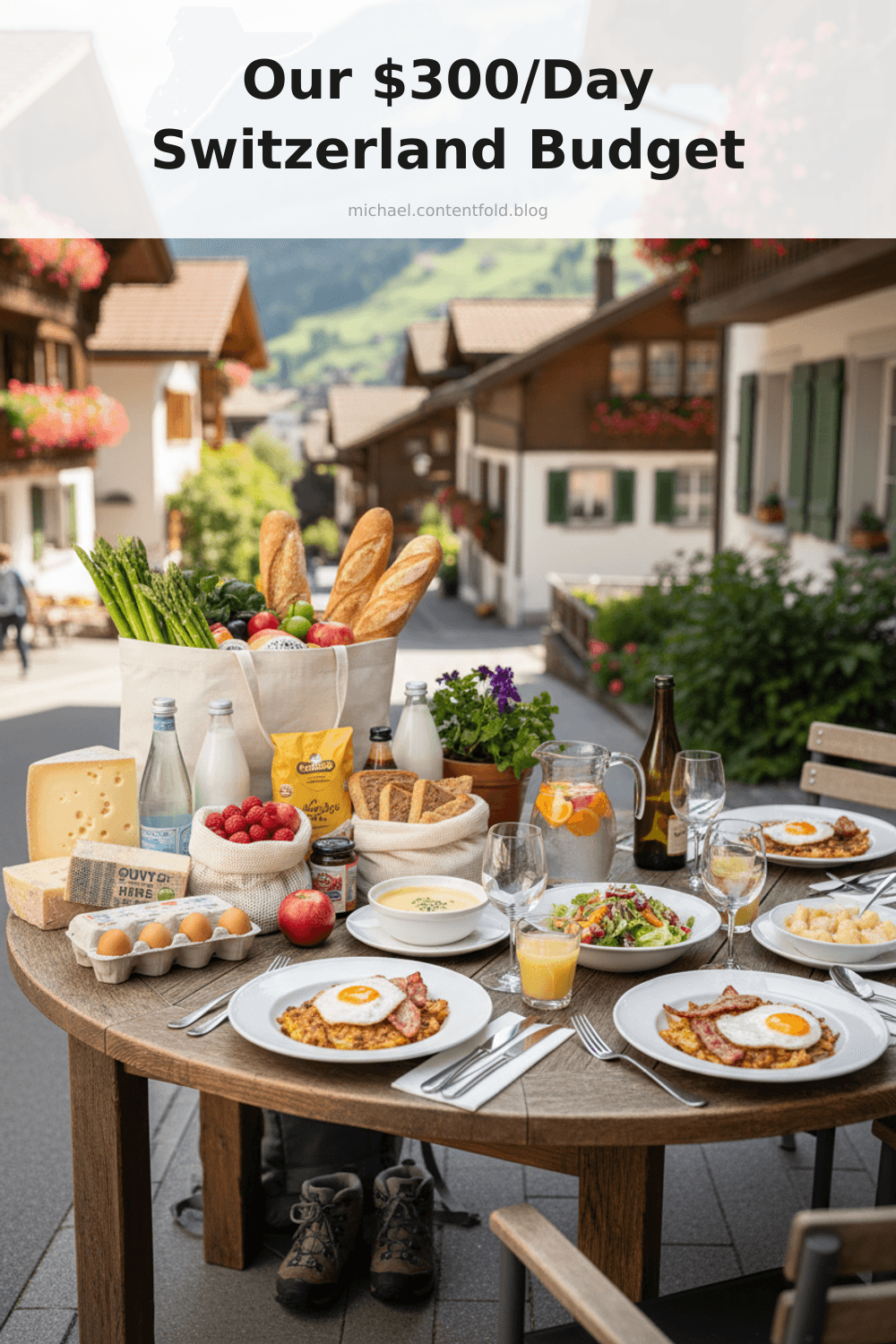
Food was one of our biggest variable costs in Switzerland, and the only way we kept it under control with a family of six was by leaning hard on grocery stores and limiting restaurant meals to once per day.
For us, that usually meant we ate out once per day, typically dinner, and then used grocery stores for breakfast, simple lunches, drinks, and snacks.
Our breakfasts were simple: yogurt, granola, and sometimes a muffin for the kids instead of big American-style breakfasts. That alone cut out a huge chunk of what we would’ve spent on sit-down breakfasts.
At Swiss grocery stores, grocery prices (except meat) felt similar to U.S. Prices, which helped us keep costs down. We bought bread for about 2 USD per loaf and lunch meat for about 2 USD, and then packed to-go sandwiches and snacks from the grocery store for daytime exploring.
Chicken and beef were noticeably more expensive per pound than in the U.S., so we didn’t rely on meat-heavy grocery meals as much.
We still bought treats like gelato, cones, and small snacks out and about, but the core of our food strategy was: groceries for most meals, restaurants once a day.
Eating out in Switzerland was significantly more expensive than in Spain and more expensive than U.S. Restaurant prices, so that “once per day” rule made a big difference for our overall food cost in Switzerland as a family.
Drinks were another place where the small numbers add up fast.
We realized quickly that buying water on the go at 4–5 CHF per bottle for six people added up very fast. Refilling water bottles at fountains was essentially free compared to paying 4–5 CHF per bottle multiple times a day, so we switched to carrying our own reusable water bottles in a backpack and refilling them at public drinking fountains around the cities. That one change made a noticeable dent in our daily spend.
For non-water drinks, we found that soft drinks like Coke Zero were reasonably priced at grocery stores, even in city centers, so if we wanted something other than water, we’d grab it there instead of at a restaurant or kiosk.
From a pure “food cost Switzerland family” perspective, the pattern that worked for us was: groceries for breakfast and lunch, restaurant for dinner, plus some treats, and being really intentional about where we bought drinks. That balance let us experience Swiss restaurants without letting “eating out in Switzerland price” blow up the budget, and using Switzerland groceries vs restaurants strategically is what made the numbers workable for a family of six.
Activities, Museums, and How We Paced Our Days to Control Costs
We kept our Switzerland activities pretty simple on purpose: usually 1–2 activities per day, and then we’d follow any heavier day with something lighter to keep both our energy and our costs under control.
On heavier activity days, like when we stacked multiple museums or did a big outing, we made sure the next day was more relaxed, with just a small activity or a free experience. That rhythm helped a lot with the kids, but it also meant we weren’t paying for big-ticket attractions every single day.
A big piece of our strategy was using the Swiss Travel Pass to lower activity costs.
Many museums and at least one ferry ride were free with the Swiss Travel Pass, and we took advantage of that, especially in Bern and Zurich. Using the Swiss Travel Pass for free museums significantly reduced our activity costs compared to paying full price for a family of six. If we’d paid out of pocket for every museum, the numbers would’ve added up fast.
We also leaned on things that did double duty as both “activity” and “food.” We enjoyed visiting market hall-style food courts in several cities, where we could try different cuisines from around the world in one place. These market halls doubled as both an activity and a meal, letting the kids sample a variety of foods in a casual setting. Market halls were a more budget-friendly and flexible way to eat out compared to sit-down restaurants, and they slotted nicely into those 1–2 activity days without feeling like “one more thing” on the schedule.
Transportation sometimes counted as an activity too. We used free or discounted ferries as both transport and a scenic activity, which meant we weren’t paying separately for a “boat tour” on top of getting from point A to point B.
Overall, we tried to keep a balance between paid attractions and free or low-cost experiences like walking around cities and enjoying views. That mix, 1–2 planned things, lighter days after big ones, free museums with the Swiss Travel Pass, market halls instead of full restaurant meals, and ferries that doubled as sightseeing, was how we kept Switzerland activities with kids cost under control while still feeling like we were actually doing things.
If you’re creating content around trips like this and want to repurpose it later, tools like ContentFold can be handy for turning long-form stories and numbers into posts, newsletters, or other formats without rewriting everything from scratch.
The Lindt Chocolate Factory: What It Cost and Was It Worth It?
The Lindt Chocolate Factory is one of those things that’s not included with the Swiss Travel Pass, but for us it still ended up being a good-value splurge. Unlike the 500+ free museums you get with the pass, this is a paid attraction.
We paid about 40 CHF total for our family to enter using a family ticket that covered two adults and one paying child, and our other kids were free because kids under 7 don’t pay. We reached the factory easily by bus, and that ride was free with our Swiss Travel Pass.
For what we paid, we felt like we got a lot back, mostly in actual chocolate.
The tour includes all-you-can-eat chocolate, starting with fountains of white, dark, and milk chocolate where you use a spoon to taste. There’s also a section with Lindt chocolate balls where you can take as many as you want during the tour. Our kids left with pockets full of candy, and we’re very confident we ate more than 40 CHF worth of chocolate in value during the visit.
We also planned the order of things on purpose. We deliberately did the tour (and all-you-can-eat chocolate) before shopping so we wouldn’t overbuy while hungry.
After the tour, we went into the gift shop and bought a 6–7 pound bag of chocolate for about 20 CHF. Individual Lindt chocolate bars in the shop were about 2.50 CHF each, and those same bars were 4–4.50 CHF in Swiss grocery stores, so on that item the gift shop was at least 50% cheaper.
That combination of unlimited chocolate during the tour, a fun museum-style experience, and a reasonably priced gift shop is what made the 40 CHF feel worth it for our family.
The only slightly annoying part was the booking. You have to reserve your visit time online in advance, and when we booked about a week ahead there were only a few time slots left. The booking system can be a bit confusing, so I’d double-check the date before you confirm because it actually changed on us once. Based on that, I’d recommend booking at least 5 days ahead, and ideally more, if you care about getting a specific time.
Overall, if you’re a chocolate-loving family wondering about the Lindt Chocolate Factory cost and whether the Lindt Home of Chocolate is worth it in Switzerland, we’d say yes, for 40 CHF it was worth it for us.
Accommodation Costs and the Surprise City Tax in Swiss Hotels
We handled accommodation separately from our daily spending, and the main surprise on the hotel side was a small Switzerland hotel city tax that didn’t show up in the Booking.com totals.
For our family of 6, we used a mix of Airbnb and hotels: we stayed in Airbnbs in Bern and Interlaken, and we booked hotels through Booking.com in Zurich and Basel. Airbnbs sometimes made it easier to house all six of us in one space, while hotels were more likely to require two rooms.
With hotels, the family logistics were a bigger factor than the nightly rate.
Many hotels only allow two or three kids per room, so with four kids we often had to book two rooms. Sometimes the two rooms were next to each other in small bed-and-breakfast-style places, which made it easier with kids, but it was still two separate bookings instead of one big family room.
On the cost side, most other taxes and fees were already included in the Booking.com prices. The one thing that wasn’t was the Switzerland hotel city tax: it was around 5 CHF per room per night, sometimes up to about 10 USD equivalent, and we paid it directly at the hotel. It showed up as a small extra line item at checkout.
Compared to the hefty tourist taxes you might see in places like Hawaii, this Swiss city tax was small, but it’s still worth knowing about ahead of time if you’re budgeting a family accommodation Switzerland trip or comparing Airbnb vs hotel Switzerland family options.
What We Spent Overall and Who This Switzerland Budget Works For
Switzerland was expensive for us, but it was also very manageable, and honestly one of our most stress-free and favorite trips as a family.
We went in aiming to spend 3,000 USD over about 10 days (excluding lodging) and ended up around 3,200 USD. That total included the Swiss Travel Pass, mobile data, food, activities, gifts, and one bigger personal purchase. We traveled comfortably, not luxuriously, but we didn’t feel deprived.
Day to day, our rhythm helped a lot with keeping the Switzerland trip cost for a family of 6 under control. We had at least one or two activities almost every day, plus some lighter days to rest and save money. We ate out once a day and used grocery stores for the rest of our meals and snacks. That alone kept things from spiraling, because constant restaurant meals would have blown our budget.
On the transport side, the Swiss Travel Pass did a lot of heavy lifting. All our trains, trams, buses, metros, and most ferries were covered by the Swiss Travel Pass. We also used free museums and discounted mountain transport where possible, which meant we could still do “Switzerland things” without paying full price every time. We avoided overpriced bottled water as well, which sounds small, but in Switzerland those little purchases add up quickly.
In terms of is Switzerland affordable for families, especially a family of six, here’s how it felt: Switzerland is definitely more expensive than Spain and more expensive than many U.S. Destinations, but it wasn’t as bad as its reputation made us expect. You don’t need to be on a super-tight backpacker budget, but you also don’t need to spend 300 USD per meal for a family of six to enjoy Switzerland.
Our mix of one restaurant meal a day, groceries, and fully using the Swiss Travel Pass made it feel very doable. This kind of Switzerland travel budget approach works especially well for larger families who are willing to plan a bit, use public transport, and mix eating out with groceries.
If you’re okay with “comfortable, not luxurious,” and you’re willing to avoid constant restaurant meals and overpriced bottled water, then a Switzerland travel budget like ours, around 3,200 USD for about 10 days for a family of six (excluding lodging), is realistic.
For us, the combination of a clear budget, the Swiss Travel Pass, and simple food and water habits turned what could’ve been a stressful “this is so expensive” trip into one of the most relaxed and enjoyable family trips we’ve ever taken.
Closing
Looking back, Switzerland was definitely not a cheap trip, but with a solid plan, the Swiss Travel Pass, and a few simple habits around food and water, it was way more manageable than I expected for a family of six.
If you’re okay with grocery-store meals, walking a lot, and choosing a few key paid experiences instead of trying to do everything, Switzerland can be a really fun, low-stress family trip rather than a financial horror story.
Hopefully seeing our actual numbers and choices gives you a clearer idea of what might work for your own family and helps you decide if this kind of itinerary and budget feels doable for you.
Frequently Asked Questions
How much did the trip cost for your family of six?
We tracked our expenses closely, and while the exact total can vary, we managed to keep our daily spending on transport, food, and activities manageable without sacrificing the experience.
What is the Swiss Travel Pass, and how did it benefit your family?
The Swiss Travel Pass is a convenient ticket that allows unlimited travel on the Swiss Travel System network, including trains, buses, and boats. For our family, it made navigating between cities and local attractions much easier and more cost-effective.
Were there any specific strategies you used to save money during your trip?
We focused on budgeting for transport, food, and activities separately from lodging, which allowed us to better manage our daily expenses. Additionally, we opted for local eateries and public transport instead of pricier options to keep costs down.
How did you find the cost of food in Switzerland compared to Spain?
We found that dining out in Switzerland was generally more expensive than in Spain, but with careful planning and choosing local spots, we could enjoy meals without breaking the bank.
Is it possible to enjoy Switzerland on a budget with kids?
Absolutely! With careful budgeting, planning, and the right choices in transport and dining, families can have a fulfilling experience in Switzerland without feeling deprived or overspending.
The Moving to Spain & Europe Guide
70+ pages on moving a family to Spain: the visas compared, the 90-day countdown, schools, and your first 30 days.


